Bulgaria Moves to Control Russian-Owned Oil Refinery
In a significant response to international pressure, the Bulgarian government has taken decisive action against Russian energy interests within its borders. The parliament has authorized the seizure of assets belonging to Lukoil, Russia's second-largest oil company, following sweeping sanctions imposed by the United States.
The dramatic move comes as Western nations continue to tighten economic pressure on Russia over its ongoing military operations in Ukraine. The United States last month targeted both Lukoil and Rosneft, Russia's two largest oil producers, with comprehensive sanctions.
Critical Infrastructure at Stake
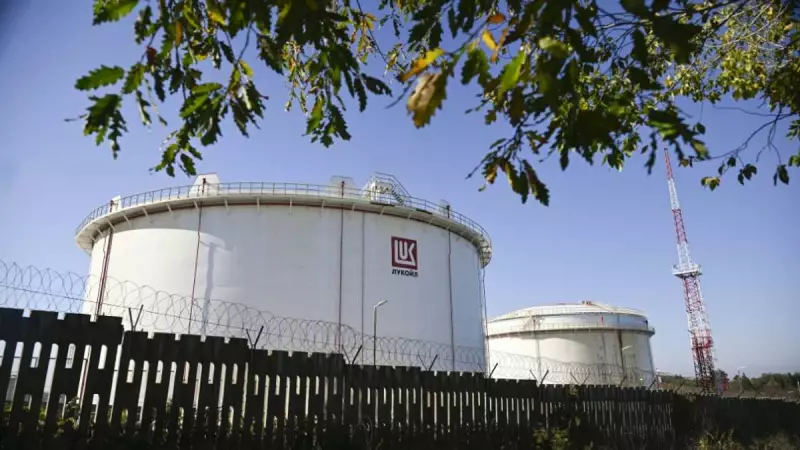
At the center of this geopolitical confrontation stands the Neftochim refinery located in the Black Sea city of Burgas. This facility represents the largest oil refinery in the entire Balkans region and has been under Lukoil's ownership since 1999.
Beyond the refinery itself, Lukoil maintains extensive operations throughout Bulgaria, including a network of oil depots, petrol stations, and companies supplying ships and aircraft. This infrastructure gives the Russian company what experts describe as a quasi-monopoly position in the Bulgarian energy market.
The parliamentary authorization, enacted a week ago, empowers the government to take control of these critical assets amid growing concerns that the impending US sanctions could force the refinery to cease operations entirely.
New Leadership Appointed
On Friday, Bulgarian officials announced the appointment of Rumen Spetsov, director of the National Revenue Agency, as Special Administrator tasked with overseeing the seized Lukoil assets. The appointment was confirmed by Economy Minister Petar Dilov following a cabinet meeting.
Minister Dilov expressed confidence in Spetsov's qualifications during a press conference, stating that the nominee "meets all legal requirements" for the crucial position. Notably, Spetsov brings an unusual background to the role, having previously achieved recognition as a bodybuilding champion.
According to government statements, Spetsov's primary responsibility will be to "ensure effective and lawful control over the body operating the critical infrastructure." The emergency legislation grants the special administrator broad powers, including the authority to arrange the sale of shares to new owners with government approval.
Political Controversy and International Reaction
The Bulgarian government's aggressive action has not proceeded without significant controversy. President Rumen Radev attempted to veto the legislation but was overruled by parliament, highlighting the deep political divisions surrounding the issue.
President Radev has publicly criticized the measure, arguing that it undermines "the rule of law" and creates "an unreasonably high risk to public finances" by potentially exposing Bulgaria to substantial compensation claims from Lukoil through international legal channels.
The political opposition, comprising both pro-Russian and liberal factions, has leveled serious accusations against the government. Opposition lawmakers claim the ruling coalition is preparing to transfer the valuable refinery assets to a company with close ties to government interests—an allegation the coalition vehemently denies.
International reaction has added another layer of complexity to the situation. Moscow's ambassador to Sofia, Eleonora Mitrofanova, told Russian news agency TASS that Bulgaria was "setting a dangerous precedent" with actions that "look like a law on property expropriation."
Energy Security Measures
Amid the political and diplomatic turmoil, Bulgarian authorities are taking additional steps to safeguard the country's energy security. Energy Minister Zhecho Stankov indicated that the government's actions are designed to facilitate the issuance of a license from the US Treasury's Office of Foreign Assets Control (OFAC) that would permit the refinery to continue operations beyond November 21, when the sanctions take full effect.
In a related precautionary measure, Bulgarian lawmakers adopted temporary restrictions on petroleum product exports last month, including shipments to other European Union member states. These measures aim to ensure adequate domestic fuel supplies as the November 21 sanctions deadline approaches.
The situation remains fluid as Bulgaria navigates the complex intersection of energy security, international diplomacy, and economic stability while caught between Western sanctions and Russian energy dependence.