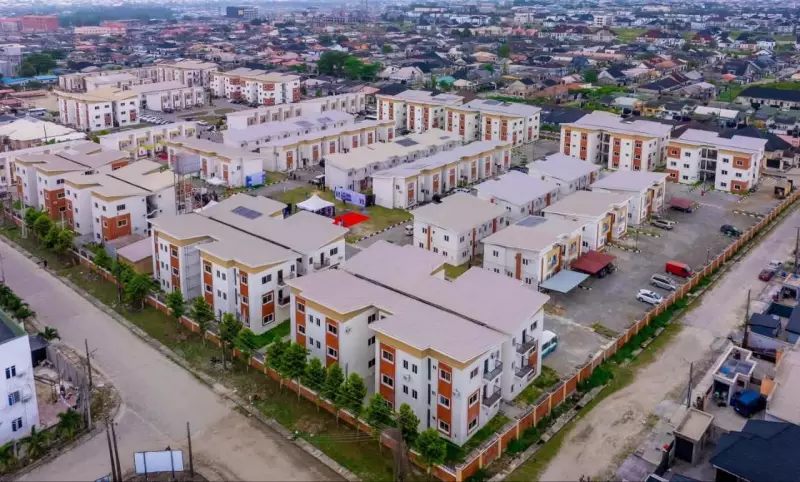
Nigeria's severe housing shortage is being aggressively worsened by a multi-billion naira racketeering industry that systematically preys on low-income citizens, pushing them further from the dream of decent shelter.
The Shadow Industry of Exploitation
In major urban centers from Lagos and Abuja to Port Harcourt and Kano, the allocation and marketing of affordable housing are now dominated by illegal middlemen, unscrupulous estate agents, and informal 'area boys.' These operators create parallel systems that distort prices and block access for those most in need.
The core issue remains a critical shortage of quality, affordable housing. For every available unit, multiple bidders including agents, speculators, and desperate tenants compete fiercely, creating a perfect environment for exploitation.
Illegal agents now act as gatekeepers, imposing arbitrary charges like consultation fees, inspection fees, and even 'community development' fees. Some demand as much as N10,000 simply for viewing an apartment, with no guarantee the property is genuine.
Government Schemes Hijacked by Syndicates
The situation is particularly dire in government-funded housing estates intended for low- and middle-income earners. Investigations reveal that racketeering syndicates have completely taken over allocations, selling slots far above official prices.
Houses meant for transparent balloting are instead cornered by insiders within housing agencies, who resell them at inflated rates. Civil servants in charge of allocation frequently collude with private agents to sell forms or reserve spaces for favored buyers.
One Lagos tenant who applied for a low-cost unit in 2023 reported being asked to pay facilitation charges twice the cost of the application form. 'If you don't settle them, they say your file will not move,' she revealed. 'Meanwhile, these houses are built with public money.'
The private real estate market shows similar patterns. As rents surge by 50 to 100 percent year-on-year, racketeering manifests through fake agents collecting multiple payments for the same apartment, speculators withholding units to force price increases, and landlords demanding two or three years' rent upfront illegally.
Devastating Impact and Regulatory Response
For Nigerians earning below N100,000 monthly, the crisis has reached breaking point. Many spend over 60 percent of their income on rent, far above the UN's recommended 30 percent benchmark.
The House of Representatives' ad hoc committee estimates the Federal Capital Territory loses approximately N800 billion yearly to real estate fraud. A notable case involves the Petroleum and Natural Gas Senior Staff Association of Nigeria, which paid over N4.2 billion to a developer since 2019 without receiving a single house.
A 2023 EFCC investigation uncovered over 60 'phantom estates' advertised by companies with no construction track record. The commission recently arrested Nwobo Chibuike for allegedly defrauding members of the public of between N3.5 million and N60 million through non-existent FCT plots.
Since its establishment in 2020, the Lagos State Real Estate Regulatory Authority (LASRERA) has received over 1,577 petitions related to real estate fraud. The agency has resolved 1,027 cases, with eight pending in court.
Between 2020 and 2024, LASRERA recovered approximately N478.13 million and 18 properties from fraudulent practitioners. Despite over 100,000 individuals practicing real estate in Lagos State, fewer than 1,000 are registered with LASRERA, indicating massive regulatory gaps.
Housing economists note that racketeering inflates urban rents by up to 25 percent, worsens homelessness, and pushes low-income earners into dangerous slums.
Experts including the Nigerian Institution of Estate Surveyors and Valuers (NIESV) are raising alarms, demanding urgent action through digitization of land records, strict licensing of agents, criminal prosecution of fraudulent developers, and a national tenants' protection framework to combat this growing crisis.