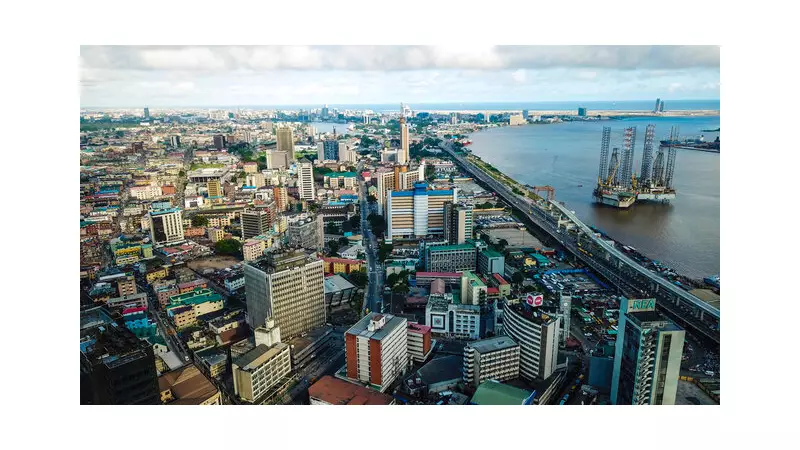
In Nigeria's dynamic real estate landscape, one factor consistently dominates property valuation discussions: location. Industry experts confirm that geography, neighborhood context, and accessibility frequently outweigh building quality or size when determining home prices across major Nigerian cities.
The Unmatched Power of Location Premium
For decades, real estate professionals have maintained that location represents the most powerful force shaping residential property values nationwide. This principle holds particularly true in Nigeria's turbulent property market, where inflation, currency fluctuations, and construction costs continuously push prices upward.
Location often determines more than half of a property's total value in major urban centers, with the price gap between premium and ordinary locations widening significantly over the past decade. The disparity has become increasingly visible as urbanization accelerates and cities expand outward.
Stark examples illustrate this divide. In Lagos, a three-bedroom flat in Lekki Phase 1 can sell for ten times the cost of a comparable unit in Abijo or Sangotedo. Similarly, in Abuja, a two-bedroom apartment in Maitama may cost ten times what a similar property in Lugbe commands.
Key Factors Driving Location-Based Valuation
Multiple elements combine to create location premiums across Nigerian cities. Proximity to commercial hubs and employment centers remains one of the strongest price drivers. Properties near Victoria Island, Ikoyi, and strategic parts of Lekki attract substantial demand from corporate executives, expatriates, and foreign missions in Lagos.
According to a Lagos-based valuer, "People will always pay more to live close to work. The more traffic worsens, the higher the value of central locations becomes." This pattern repeats in Abuja, where properties in Central Area, Asokoro, and Wuse II maintain premium pricing despite general economic slowdown.
Transport infrastructure represents another critical determinant of property value. Quality road networks, effective drainage systems, multiple access routes, and public transportation proximity can increase home prices by 15 to 40 percent depending on the region.
The completion of the Lekki-Epe Expressway in the early 2010s triggered massive land and housing price increases from Lekki Phase 1 to Awoyaya. Similar patterns emerged along Abuja's Airport Road corridor, where improved networks made communities like Lugbe, Kuje, and Idu more attractive to middle-class buyers.
Security, Amenities, and Environmental Considerations
Security continues to rank as a top priority for Nigerian homebuyers. Areas with robust private or government-backed security, street lighting, and controlled access consistently command higher prices. Gated estates in Magodo, Omole, and parts of Ikeja GRA in Lagos exemplify this trend, as do Jabi and Gwarimpa in Abuja.
Muhammad Bature, First Vice President of the Nigerian Institution of Estate Surveyors and Valuers (NIESV), emphasizes that "Buyers and investors do not simply purchase structures, they buy strategic advantages, accessibility, prestige and the risk profile of a location."
Social amenities significantly influence property values, with families particularly attentive to school clusters. Neighborhoods hosting established private schools or international institutions typically experience higher demand. The presence of retail hubs, green spaces, and reliable utilities further enhances desirability.
Environmental risks increasingly shape buyer decisions as climate concerns intensify. Flood-prone areas, coastal zones vulnerable to sea-level rise, and neighborhoods lacking drainage infrastructure now face buyer resistance. This impact is visible in the Lekki-Eti-Osa corridor, Isheri North, parts of Port Harcourt's waterfront areas, and communities along the Ogun River.
Conversely, elevated locations or areas with waterfront views—such as Ikoyi, Banana Island, Osborne, or highland zones in Jos and Enugu—maintain premium pricing despite market fluctuations.
Government Policies and Future Outlook
Urban planning decisions, zoning enforcement, and land administration policies substantially influence market values. Effective planning boosts investor confidence, while ambiguous land titles, inconsistent approvals, or sudden demolition exercises generate caution among buyers.
Recent demolition campaigns in Lagos, Kano, and parts of the Federal Capital Territory have shaken confidence in certain districts. Real estate practitioners note that even legally justified government actions can reduce location attractiveness when planning rules lack clarity.
Gbenga Ismail, past Chairman of NIESV's Lagos branch, highlights that predictable taxation and moderate transaction costs encourage investment, while excessive charges dampen activity. He also notes that targeted urban renewal projects improve neighborhood perception and attract private capital inflows.
As cities expand and urban pressures intensify, experts anticipate the gap between premium and low-value locations will widen further. Rising fuel prices, worsening traffic congestion, and stretched infrastructure mean households will continue paying premiums for proximity, safety, and convenience.
For developers, the message remains clear: the most successful housing projects will align with infrastructure development, climate resilience, and integrated community amenities. Location, as the fundamental driver of Nigerian property values, shows no signs of relinquishing its dominant position in the real estate valuation hierarchy.