Mogadishu's Remarkable Transformation Through Construction Boom
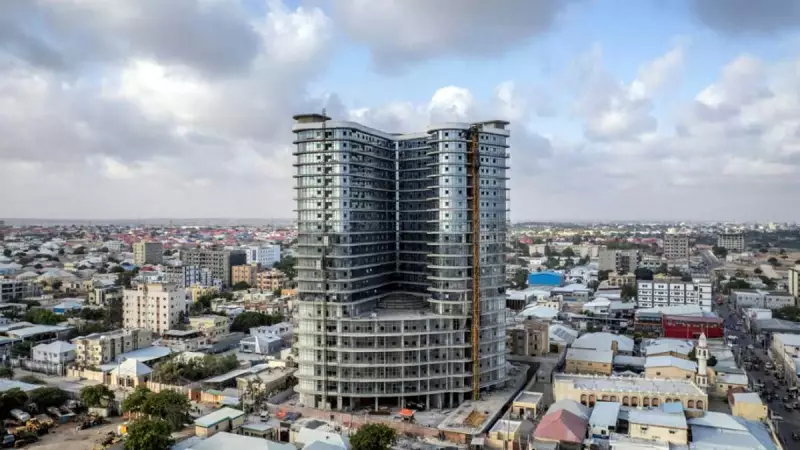
For the first time in decades, Mogadishu is witnessing an extraordinary building boom that signals the city's gradual recovery from prolonged conflict. While bullet holes still mark pavements and ruined buildings line many streets, the dominant sound across the capital has shifted from destruction to construction.
The east African nation endured civil war throughout the 1990s, which evolved into an ongoing Islamist insurgency during the 2000s. Despite these challenges, approximately three million residents in Mogadishu—relatively protected from conflicts occurring just hours outside the city—are now experiencing unprecedented urban development.
Security Improvements Fuel Construction Momentum
The Somali government attributes the improved security situation to a newly implemented checkpoint system. As dusk settles over the city, security officers meticulously search every vehicle approaching Jazeera checkpoint, located 10 kilometers from Mogadishu. Authorities have established strict protocols, refusing entry to vehicles that have been outside the city for more than 20 days—the estimated time required to rig well-hidden explosives.
According to government statistics, insurgent attacks in Mogadishu decreased by 86 percent from 2023 to mid-2025. National Security Advisor Awes Hagi Yusuf confidently stated that Mogadishu has become "very secure," noting that residents have already begun investing in their city and will naturally protect their investments.
Taxi driver Abdullah Dhiblawe, 38, confirmed the improved security environment, recalling how soldiers previously demanded money at every checkpoint and "would hit you with the muzzle of their guns," but acknowledged the situation has significantly improved.
Diaspora Investments Drive Economic Revival
The Somali diaspora has emerged as a crucial source of capital fueling Mogadishu's reconstruction. World Bank data shows remittances accounted for almost 15 percent of Somalia's GDP in 2023, nearly doubling the following year—a trend the Somali National Bureau of Statistics indicates reflects expanding commercial activities.
Mohamed Gheedi, CEO of Premier Bank—the first financial institution to introduce MasterCard to Somalia—explained that "the diaspora brings capital and know-how, while local businesses are scaling with bank financing." Investment has primarily flowed into real estate, fintech, trade, and infrastructure, targeting what Gheedi describes as "a fast-growing, underserved market."
Construction activity has become so widespread that masonry, metal girders, and piles of sand now commonly line city pavements. Resident Habib Farah, observing builders working on a new multi-story building along Makkah Almukarramah Avenue, pointed out the large glass windows as a significant development—a feature that would have been unthinkable during periods of intense conflict when residents "were afraid of shattering."
Challenges of Growth and Gentrification
Despite the visible progress, significant challenges remain. Al-Shabaab militants have retaken approximately 200 villages around the capital this year, and Western donors are showing fatigue in funding the ongoing conflict, limiting a crucial revenue source.
Mahad Wasuge from the Somali Public Agenda think tank highlighted growing concerns about gentrification and inequality. While wealthy officials and foreigners enjoy improved security and living standards, Wasuge noted this experience "is completely different from the day-to-day experience of people in other parts of the city."
Tensions have escalated to the point of armed confrontations. In August, several people died in southern Mogadishu when security forces clashed with residents facing forced eviction. Wasuge expressed concern that people are being displaced "from the schools, from the hospitals, from just basic, basic government services," questioning who ultimately pays the price for Mogadishu's apparent rise.
The construction sector remains largely unregulated, and reliable statistics are scarce. However, Mogadishu's mayor revealed in June that more than 6,000 buildings had been constructed within five years—a remarkable figure that underscores the scale of the city's transformation despite ongoing security and social challenges.