
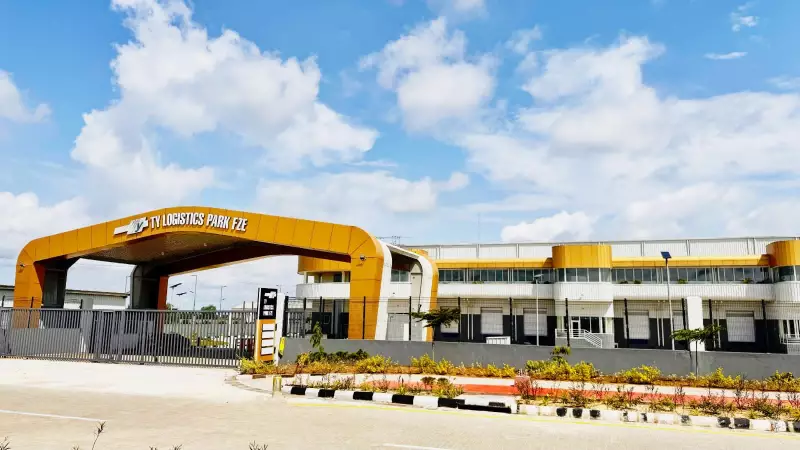
A major new logistics hub in Lagos has declared its mission to tackle the massive financial drain caused by Nigeria's inefficient supply chains, which cost the economy a staggering $1.7 billion every year.
Addressing Structural Failures in Nigerian Logistics
Arno van der Merwe, the Chief Executive Officer of the newly launched TY Logistics Park, stated that the country's logistics challenges are deeply rooted in structural problems, not temporary issues. He highlighted a combination of critical factors including chronic underinvestment in infrastructure, poor connections between different transport modes, severe port congestion that can delay shipments for 18 to 21 days, fragmented customs procedures, and unreliable warehousing standards.
According to Van der Merwe, this perfect storm of inefficiencies has unfortunately positioned Nigeria as one of the most expensive logistics corridors in the world for businesses trying to move goods.
An Integrated, Tech-Driven Solution
To combat these issues, TY Logistics Park is introducing a comprehensive model that merges five essential logistics functions into a single, controlled environment. This integrated ecosystem encompasses clearing and forwarding, contract logistics, route-to-market planning, free zone operations, and digital supply chain visibility.
The company asserts that this approach is specifically engineered to minimize friction across the entire supply chain, ultimately leading to significant cost reductions for its clients.
One of the most significant advantages for businesses is the park's location within the Lekki Free Trade Zone. This allows companies to store their goods without paying duties upfront. Import duties are only required when the goods are released for the local market, a system that greatly eases the cash flow pressures faced by manufacturers and distributors.
Facilities, Scale, and Impact on SMEs
The first phase of the development is substantial, covering 100,000 square meters. It is equipped with high-grade racking systems, jointless flooring capable of supporting heavy machinery, and sophisticated, system-driven inventory management. The park also prioritizes sustainability, featuring energy-efficient facilities that have earned green certifications and are projected to reduce water and energy consumption by an estimated 30%.
Clients operating within the free zone also benefit from zero corporate taxes and full repatriation rights on their profits.
Van der Merwe emphasized that the park is designed to serve businesses of all sizes. "A client with two pallets gets the same attention as a client with 10,000 pallets," he stated, positioning TY Logistics Park as a crucial enabler for Nigeria's burgeoning Small and Medium Enterprise (SME) export community, particularly in sectors like food, beauty, crafts, and light manufacturing.
Strategically located at the "orbital cusp" of the Lekki Free Zone, the park offers exceptional connectivity: it is just 12 minutes from the international airport, 40 minutes from Lagos, 50 minutes from Apapa, and directly connected to the Lekki Port.
The park expects to handle between 500,000 and 1 million metric tons of cargo annually during its initial operational phase, with the capacity to scale up to 2 million tons. It is targeting key sectors such as pharmaceuticals, automotive, consumer goods, oil and gas, and chemicals, and is already providing services for segments of the massive Dangote Refinery and Fertilizer operations.
Although Van der Merwe brings extensive experience from leading logistics operations in Kenya, South Africa, and other parts of East Africa, he was keen to stress that the Lekki project is fundamentally a Nigerian story, backed by long-term commitment and investment into the nation's economy.




