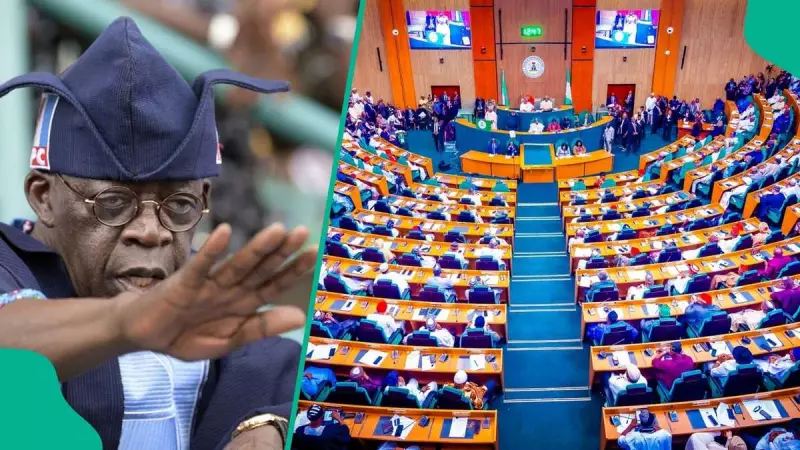
The Nigerian House of Representatives has issued a strong directive to the federal government, demanding the immediate suspension of plans by the West African Examinations Council (WAEC) to introduce Computer-Based Testing (CBT) for the 2026 West African Senior School Certificate Examination (WASSCE).
Lawmakers expressed grave concerns that rushing the digital transition could result in catastrophic consequences for Nigerian students, including massive failure rates, depression, and even student deaths due to the immense pressure and inadequate preparation.
Inadequate Infrastructure Sparks Educational Crisis
The resolution emerged following the adoption of a motion of urgent public importance presented by Honourable Kelechi Nworgu on Thursday, November 13, 2025. During the session, Nworgu highlighted the severe infrastructure deficit plaguing Nigeria's educational system.
Most of the over 25,500 secondary schools across Nigeria, particularly those in rural areas, lack functional computers, reliable internet access, and qualified computer teachers, creating an impossible environment for CBT implementation.
The lawmaker emphasized the stark reality that many Nigerian students have never interacted with computers, yet they would be expected to complete up to nine subjects, including theory and practical examinations, through computer-based platforms.
Social Consequences and Proposed Solutions
Honourable Nworgu warned that forcing unprepared students into CBT examinations could trigger devastating social consequences beyond academic failure. He specifically mentioned increased risks of student frustration, drug abuse, and other social vices among the youth population.
Rather than the proposed 2026 timeline, the motion suggested a more realistic implementation schedule of 2029-2030 academic year, allowing sufficient time for proper infrastructure development and teacher training.
The House responded by mandating WAEC and the Federal Ministry of Education to immediately suspend the planned CBT introduction and begin comprehensive preparations.
Legislative Actions and Budgetary Provisions
In a decisive move, the House of Representatives has taken concrete steps to address the infrastructure gap. Lawmakers urged the inclusion of specific budgetary provisions in the 2026 national budget for:
- Recruitment of qualified computer teachers nationwide
- Construction of computer halls with reliable internet access
- Installation of standby generators in schools across the country
The House has tasked its Committees on Basic Examination Bodies, Digital and Information Technology, Basic Education and Services, and Labour, Employment and Productivity with engaging critical stakeholders in both education and technology sectors.
These committees have been given a four-week deadline to complete their consultations and report back to the House for further legislative action, ensuring the matter receives continued attention and resolution.