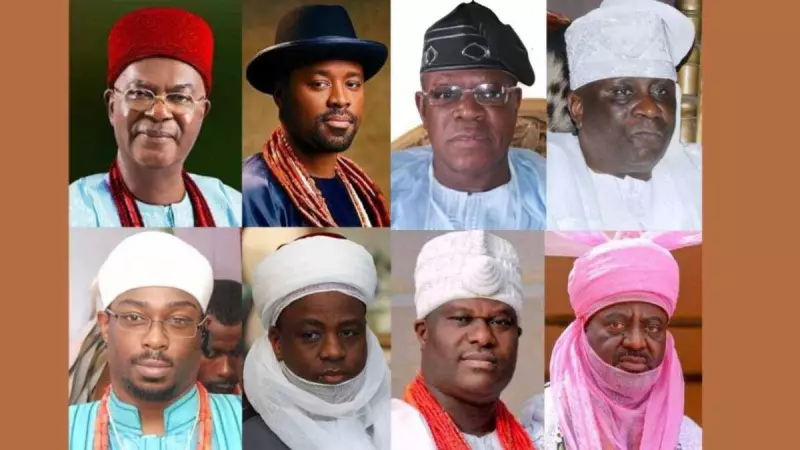
Nigeria's traditional monarchy system continues to play a significant role in the country's political landscape and development decisions. The most prominent first class kings maintain substantial influence across various sectors, with many possessing impressive educational backgrounds from prestigious institutions abroad.
The Power and Prestige of Nigeria's Traditional Rulers
These distinguished monarchs have often transitioned from royal duties to lucrative positions in multinational corporations and government institutions, accumulating considerable wealth and expanding their influence. Their unique position allows them to bridge traditional values with modern governance, making them crucial figures in Nigeria's socio-political framework.
Nigeria's Top 10 First Class Kings in 2025
Sultan Muhammad Sa'ad Abubakar III reigns as the 20th Sultan of Sokoto and spiritual leader of Nigeria's Muslim community. Born on August 24, 1956, this 69-year-old monarch commands respect as the Amir-ul-Momineen (Commander of the Faithful). Before ascending the throne, he had an illustrious military career, serving in the Nigerian Defence Academy since 1975 and commanding peacekeeping missions in Chad.
Alhaji Aminu Ado Bayero serves as the Emir of Kano, continuing the legacy of the historic Kano Emirate. His position places him among the most influential traditional rulers in Northern Nigeria, overseeing one of the region's most populous and economically significant areas.
Oba Adeyeye Enitan Ogunwusi, the 51st Ooni of Ife, stands as a paramount ruler in Yorubaland. Born on October 17, 1974, this 51-year-old monarch traces his lineage directly to Oduduwa, the founding father of the Yoruba people. His influence extends beyond traditional matters to educational leadership as Chancellor of the University of Nigeria, Nsukka.
Educational Excellence Among Royalty
The impressive educational backgrounds of Nigeria's first class kings demonstrate their preparedness for leadership in a modern world. Oba Ewuare II of Benin exemplifies this trend, having studied Economics at the University of Wales and earning a Master of Public Administration from Rutgers University in the United States.
Similarly, Obi Nnaemeka Alfred Ugochukwu Achebe of Onitsha holds a Bachelor of Science in Chemistry from Stanford University and an MBA from Columbia University. His professional experience includes directorship at Shell Petroleum Development companies across multiple countries.
The younger generation of monarchs continues this tradition of academic excellence. Olu Ogiame Atuwatse III of Warri, aged 41, earned both a BA in International Studies and Political Science and a Master of Science in Management from Case Western Reserve University in the United States.
Remarkable Records and Young Monarchs
Nigeria's traditional leadership includes some remarkable records, particularly among younger rulers. Dein Benjamin Keagborekuzi Ikenchuku Gbenoba of Agbor kingdom entered the Guinness Book of Records as Africa's youngest monarch when crowned at just two years and four months old in 1979.
Currently 48 years old, Dein Keagborekuzi spent his early years in the United Kingdom before returning to Nigeria in 1981 and assuming full governance responsibilities in 2001. His reign demonstrates how traditional institutions adapt to modern educational and governance requirements.
The passing of Alaafin Abimbola Owoade in 2022 at age 50 marked the end of an era for the Oyo Empire. Before his selection as Alaafin, he had built an impressive international career, working as a project coordinator at Manitoba Hydro in Canada after earning engineering degrees from UK universities.
Political Influence and Modern Responsibilities
Several first class kings bring substantial political experience to their traditional roles. Olubadan Adewolu Ladoja of Ibadan served as Governor of Oyo State from 2003 to 2007 and as a Senator representing Oyo South from 1992 to 1993. His coronation in September 2025 at age 81 crowned a long career in both business and politics.
Oba Rilwan Akiolu of Lagos brings 32 years of law enforcement experience to his position, having retired as an Assistant Inspector-General of Police in 2002 before ascending the throne in 2003. His background provides unique insights into security matters affecting his domain.
The reinstatement of Muhammad Sanusi II as Emir of Kano in May 2024 marked a significant political development. Previously serving as Governor of the Central Bank of Nigeria from 2009 to 2014, his advocacy for cultural reform in Northern Nigeria has made him one of the region's most influential voices.
Regional Representation and National Unity
Nigeria's first class kings represent diverse regions and ethnic groups, creating a tapestry of traditional leadership that reflects the country's cultural richness. From the Obi of Onitsha in the southeast to the Sultan of Sokoto in the northwest, these monarchs provide cultural continuity while navigating contemporary challenges.
Their collective influence extends to conflict resolution, cultural preservation, and advisory roles in government matters. The continued relevance of these traditional institutions demonstrates their adaptability and enduring importance in Nigeria's evolving democratic landscape.
As Nigeria progresses through the 21st century, its first class kings remain pivotal figures in maintaining social cohesion, promoting development, and preserving cultural heritage while engaging with modern governance structures.