
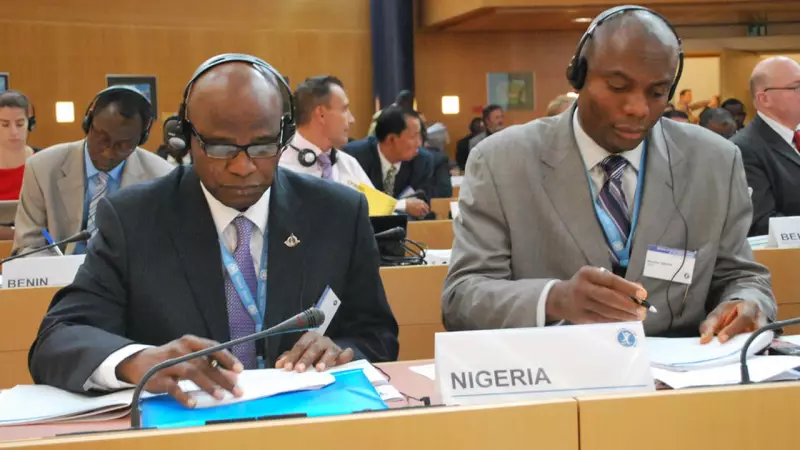
Nigeria has issued a strong appeal to the international community, urging a move away from what it describes as 'naming and shaming' the nation over its security challenges. The call was made at the United Nations Security Council in New York, where the country's top diplomat highlighted the devastating impact of the illicit flow of small arms.
A Plea for Cooperation, Not Condemnation
The Chargé d’Affaires for Nigeria's Permanent Mission to the UN, Mr. Syndoph Endoni, delivered the nation's position during a debate on the Illicit Proliferation of Small Arms and Light Weapons (SALW) and its effect on the Sahel. He argued that the unchecked spread of these weapons is a primary driver of conflict, prolonging insurgencies and intensifying the actions of terrorist and violent extremist groups.
"The human toll, including lives lost, communities displaced and livelihoods destroyed, remind us that this is not merely a security issue but a profound humanitarian and developmental concern," Endoni stated. He condemned the criminal acts enabled by readily available small arms, labeling them as inhuman and outrightly unacceptable.
Emphasizing a solution-oriented approach, the envoy declared, "We wish to stress that it is not by naming and shaming that we can solve this enormous problem but only by working together that the problem can be solved." This statement comes amidst tensions following the U.S. designation of Nigeria as a "Country of Particular Concern," a claim Nigerian authorities have firmly rejected.
The Dire Consequences of Illicit Arms in the Sahel
Nigeria's address painted a grim picture of the regional security landscape. Endoni explained that in the Sahel, the convergence of illicit arms trafficking, terrorism, organized crime, and human trafficking has created a complex environment that threatens both regional and international peace.
For Nigeria, the impact is direct and severe. The illicit circulation of small arms and light weapons continues to fuel terrorism, sustain armed banditry, and ignite communal conflicts. This undermines national and regional efforts aimed at achieving sustainable peace and development, creating a cycle of violence that is difficult to break.
Nigeria's Multi-Level Response to the Crisis
In response to this critical challenge, Endoni outlined the robust measures Nigeria has undertaken at national, regional, and multilateral levels.
Domestically, Nigeria established the National Centre for the Control of Small Arms and Light Weapons in 2021. This serves as a permanent institution to coordinate all arms control efforts and ensure the country's actions are fully aligned with its international obligations.
At the regional level, Nigeria is working closely with ECOWAS and the Multinational Joint Task Force to enhance border security, improve intelligence sharing, and conduct joint operations. These initiatives are specifically designed to dismantle trafficking networks and cut off the supply of arms to non-state actors.
On the global stage, Nigeria remains steadfast in implementing key international agreements, including the UN Programme of Action and the International Tracing Instrument (ITI). The envoy proudly noted that Nigeria was the first African State to sign and ratify the Arms Trade Treaty (ATT), viewing these instruments as indispensable for curbing the illicit arms flow and strengthening accountability.
Nigeria called for sustained international assistance in capacity-building and technology transfer. It also stressed the need to address the root causes of instability, such as poverty, inequality, and weak governance. The country reaffirmed its unwavering commitment to collaborating with the UN Security Council and all partners to build a peaceful, secure, and resilient Sahel, free from the threat of illicit weapons.




