
The White House has unveiled a comprehensive 28-point peace proposal for ending the war in Ukraine that would require significant concessions from Kyiv, including territorial losses and military limitations.
Major Territorial Concessions Proposed
According to the draft plan reviewed and supported by US President Donald Trump, the proposal would require Kyiv to cede territory to Russia and include US "de facto" recognition of Crimea and other Ukrainian territories forcibly seized by the Kremlin as Russian land.
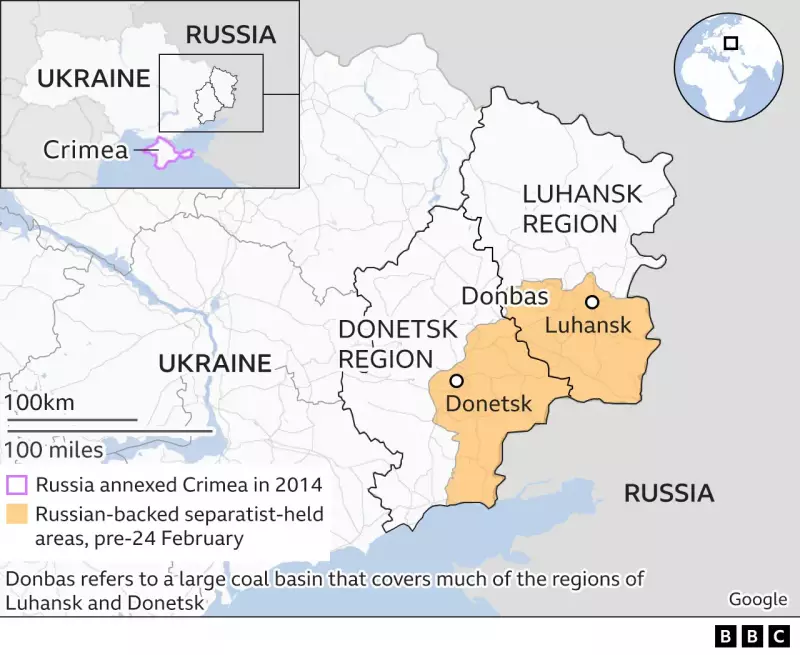
The draft outlines several stunning reversals of longstanding US policy regarding Ukraine's territorial integrity. It specifically requires the United States to recognize Crimea, Luhansk, and Donetsk as de facto Russian territory. For the Kherson and Zaporizhzhia regions, borders would be frozen along the current line of contact, constituting de facto recognition along that boundary.
In exchange for these concessions, Russia would relinquish other agreed territories it currently controls outside these five regions. A particularly contentious provision calls for Ukrainian forces to withdraw from the parts of Donetsk they currently control, with this area becoming a neutral, demilitarized buffer zone internationally recognized as belonging to the Russian Federation.
Military and Political Restrictions
The peace plan includes significant military and political constraints on Ukraine. It contains a commitment that Ukraine will not join NATO and that NATO will not station troops in Ukraine. The proposal limits the size of the Ukrainian armed forces to 600,000 personnel and calls for Ukrainian elections within 100 days.
Implementation of the entire plan would be monitored and guaranteed by a Peace Council headed by President Donald J. Trump, with sanctions imposed for violations. While security guarantees for Ukraine are mentioned in the draft, they are not detailed, though the document states the US will receive compensation for providing this guarantee.
International Reactions and Consequences
The proposal includes penalties for both sides: if Russia invades Ukraine again, global sanctions will be reinstated and recognition of new territory will be revoked. Conversely, if Ukraine launches an unprovoked missile at Moscow or St. Petersburg, the security guarantee will be deemed invalid.
The draft outlines Russia's return to the global community, including the lifting of sanctions and an invitation to rejoin the G8. It calls for "all parties" in the war to receive full amnesty for their actions during the conflict and agree not to make any future claims—a point that contrasts with the International Criminal Court warrant for President Vladimir Putin regarding the forcible deportation of Ukrainian children.
Ukrainian President Volodymyr Zelensky agreed to work with the administration on the plan after meeting a top US military official in Kyiv, saying he was prepared for "constructive, honest and swift work." However, a Russian journalist cited a Kremlin spokesperson as saying Moscow had not yet been informed that Zelensky was ready to discuss the plan.
European and Ukrainian officials have been critical of the proposal, noting it appears to repeat many of Moscow's maximalist demands from earlier in the war. A European diplomat described the effort as reminding them of "Groundhog Day," calling the territorial demands a non-starter and stating it would be "political suicide" for any Ukrainian leader to accept.
US officials insist the plan is still being developed and that any final agreement would require concessions from both sides. During a Thursday afternoon briefing, the White House press secretary said the plan remains "in flux." The proposal also calls for the return of all civilian detainees, hostages, children, and the exchange of all prisoners of war and bodies.




