
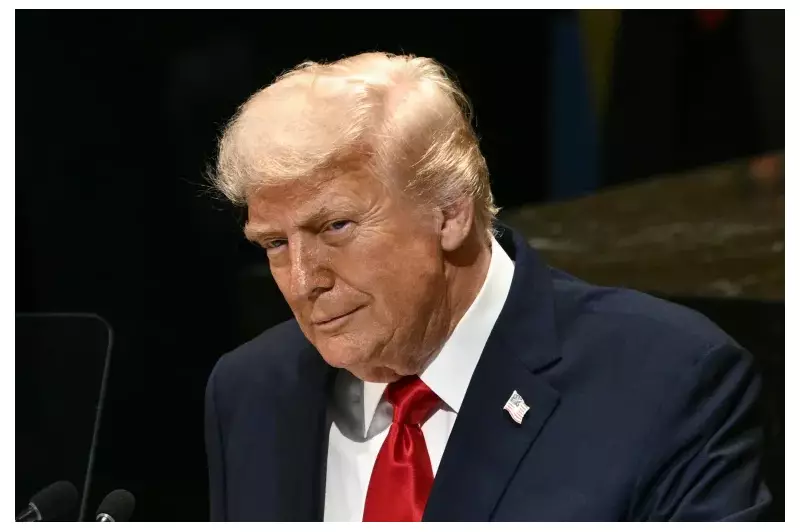
The United Nations Security Council is poised for a critical vote this Monday on a resolution drafted by the United States that aims to bolster a Gaza stabilisation plan backed by former US President Donald Trump. Washington has issued a stark warning, suggesting that a failure to adopt this resolution could plunge the region back into conflict.
Details of the US-Drafted Resolution
The resolution, which has undergone several revisions during intense diplomatic negotiations, formally endorses the peace plan that facilitated a fragile ceasefire between Israel and Hamas. This ceasefire took effect on October 10, 2025, offering a temporary respite in the Palestinian territory, which has been devastated by two years of warfare. The conflict was initially sparked by Hamas's attack on Israel on October 7, 2023.
A key component of the latest draft, obtained by AFP, is the authorisation for an International Stabilisation Force (ISF). This force would collaborate with Israel and Egypt, as well as newly trained Palestinian police units. Its mandate would be to help secure border areas, work towards the demilitarisation of the Gaza Strip, and ensure the permanent decommissioning of weapons held by non-state armed groups.
Furthermore, the ISF would be tasked with protecting civilians and securing vital corridors for humanitarian aid delivery. In a significant political move, the resolution also greenlights the formation of a Board of Peace, a transitional governing body for Gaza. This board, which Donald Trump would theoretically chair, is envisioned to have a mandate running until the end of 2027.
Controversy and Competing Visions
In a notable shift from earlier versions, the current draft text acknowledges the possibility of a future Palestinian state. It states that once the Palestinian Authority implements necessary reforms and the rebuilding of Gaza is underway, the conditions could be right for a credible pathway to Palestinian self-determination and statehood.
However, this prospect has been met with firm rejection from Israel. Israeli leader Netanyahu, during a cabinet meeting on Sunday, reiterated that our opposition to a Palestinian state on any territory has not changed.
The US diplomatic push faces a challenge from Russia, a veto-wielding permanent member of the Council. Moscow has circulated a competing draft resolution, arguing that the American document does not sufficiently support the creation of a Palestinian state. The Russian text calls for the Council to express its unwavering commitment to a two-state solution but does not, for now, authorise the Board of Peace or the international force.
Diplomatic Manoeuvring and Expected Outcome
The United States has intensified its campaign to secure support for its resolution. US ambassador to the UN, Mike Waltz, penned an op-ed, asserting that any refusal to back this resolution is a vote for either the continued reign of Hamas or a return to war.
To bolster its position, the US has publicised a joint statement of support from several Arab and Muslim-majority nations, including Qatar, Egypt, Saudi Arabia, and Turkey. Despite Russian objections and hesitancy from some other member states, several diplomats anticipate the US draft will be adopted.
Analyst Richard Gowan of the International Crisis Group suggested that while Russia and China may have reservations, they are likely to abstain rather than use their veto against a resolution supported by key Arab nations. The vote is scheduled for 5:00 pm (2200 GMT) on Monday.




