
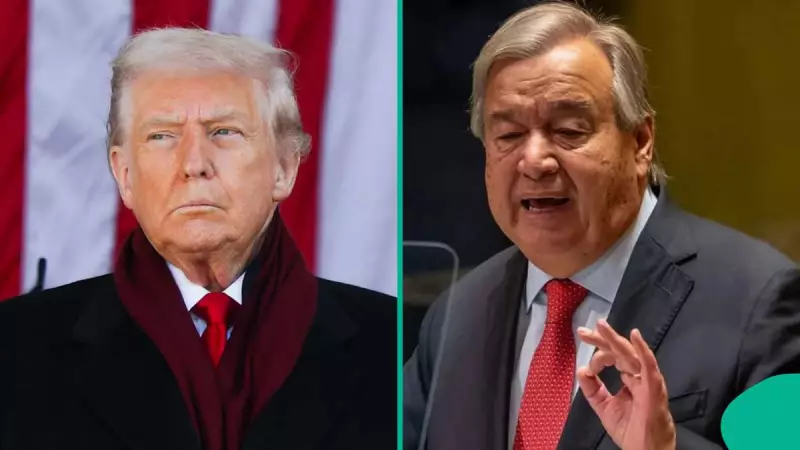
In a significant diplomatic development, the United Nations Security Council has thrown its weight behind a United States-proposed resolution supporting President Donald Trump's blueprint to end the prolonged conflict in Gaza. The historic vote, which took place on November 17, 2025, not only endorses the peace initiative but also greenlights the deployment of an international stabilisation force to the region.
Key Provisions of the UN Resolution
The adopted resolution formally recognises the framework for Gaza's reconstruction and economic recovery, adding international legitimacy to the process. A central component of the plan is the authorisation of an international stabilisation force (ISF) for the Palestinian enclave. This force is seen as crucial for reassuring nations contemplating troop contributions and for supporting a transitional governance body.
Furthermore, the resolution establishes a Board of Peace, which will be chaired by President Trump himself. This transitional authority is tasked with the monumental responsibility of overseeing Gaza's redevelopment. The resolution empowers the stabilisation force to undertake the demilitarisation of Gaza, a process that includes decommissioning weapons and dismantling existing military infrastructure.
Mixed Reactions and Global Stance
The resolution has elicited sharply divided responses from the key parties involved. The Palestinian Authority welcomed the move and confirmed its readiness to participate in its implementation. Diplomatic sources noted that the Authority's endorsement last week was instrumental in preventing a potential Russian veto.
In stark contrast, Hamas has outrightly rejected the plan. In a strongly worded statement, the group declared, "The resolution imposes an international guardianship mechanism on the Gaza Strip, which our people and their factions reject." The group insisted it would not agree to disarm.
The resolution also stirred controversy in Israel due to its references to the possibility of Palestinian statehood. The text suggests that "conditions may finally be in place for a credible pathway to Palestinian self-determination and statehood" once reforms by the Palestinian Authority advance and Gaza's redevelopment progresses. This directly contradicted public statements from Israeli Prime Minister Benjamin Netanyahu, who on November 16 reaffirmed Israel's opposition to a Palestinian state and pledged to demilitarise Gaza "the easy way or the hard way."
International Voting and Diplomatic Remarks
The vote saw Russia and China abstain, which allowed the resolution to pass. Both powers criticised the text for failing to assign a clear role to the United Nations in Gaza's future. Russian ambassador Vasily Nebenzya expressed concerns to the council, stating, "In essence, the council is giving its blessing to a U.S. initiative on the basis of Washington’s promises, giving complete control over the Gaza Strip to the Board of Peace and the ISF, the modalities of which we know nothing about so far."
Mike Waltz, the U.S. ambassador to the UN, portrayed the resolution as a beacon of hope. He told the council that it "charts a possible pathway for Palestinian self-determination … where rockets will give way to olive branches and there is a chance to agree on a political horizon." He added that the plan "dismantles Hamas’ grip, it ensures Gaza rises free from terror’s shadow, prosperous and secure."
President Trump celebrated the successful vote on social media, calling it "a moment of true Historic proportion" and promising that announcements regarding the Board's members would follow in the coming weeks. This UN endorsement builds upon the initial agreement reached last month by Israel and Hamas on the first phase of Trump's 20-point plan, which included a ceasefire and a deal for the release of hostages.




