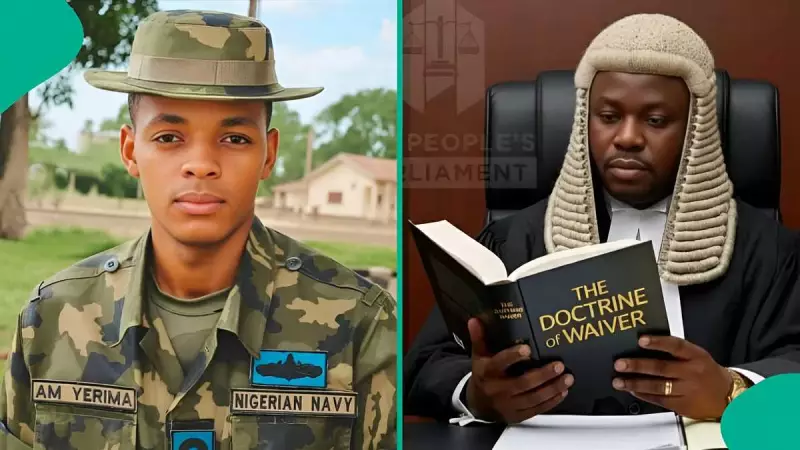
A Nigerian legal expert has provided detailed analysis of the recent confrontation between Federal Capital Territory Minister Nyesom Wike and a naval officer over a property in Abuja, highlighting specific laws violated during the incident.
Legal Perspective on Military-Civilian Conflict
The lawyer, speaking through his platform The People's Parliament on Facebook, stated that both parties involved in the November 13, 2025 incident acted improperly. However, he particularly emphasized the legal limitations facing military personnel in civil disputes.
The confrontation occurred when Minister Wike attempted to access a property allegedly owned by a senior naval officer, only to be prevented from entering by Lieutenant Yerima who was stationed at the location. This led to a heated exchange that was captured on video and subsequently went viral across social media platforms.
Land Use Act Violation Cited
The legal expert specifically referenced the Land Use Act as the primary legislation governing such matters. "Under the Land Use Act, the Governor of a state is primarily responsible for the allocation and management of land within such a state, of which Wike is equivalent to in the FCT," the lawyer explained.
He further clarified that land disputes fundamentally constitute civil cases where even police intervention is limited until criminal activities occur. The military's core responsibilities, he noted, are restricted to defending Nigeria from external aggression, maintaining territorial integrity, and securing borders.
"Any attempt by a military officer, like what we saw today, to assert jurisdiction or forcibly intervene in a non-military land dispute is unlawful and an abuse of power," the lawyer asserted, demanding that both the officer and whoever deployed him face appropriate punishment.
Public Reaction and Social Media Response
The legal analysis sparked significant public discussion, with social media users expressing diverse opinions on the matter. While some applauded the officer's firm stance against the minister, others supported the legal perspective emphasizing rule of law.
One commenter, Charles, challenged the lawyer's position by suggesting: "You for go there to tell the Naval Officer what the law say na let them show you what Military Order say."
Another social media user, Temilola Akinyemi, humorously noted: "The soldiers don make this year slogan valid once again o 'No gree for anybody' Even police sef collect him own."
The discussion highlighted the ongoing tension between legal principles and public sentiment in Nigeria's democratic landscape, with many users questioning the practical application of rule of law in such situations.
Broader Implications for Civil-Military Relations
This incident has raised important questions about the proper role of military personnel in civil matters and the boundaries of their authority. The lawyer's firm position that "ignorance of the law is no excuse" underscores the necessity for all security personnel to understand legal limitations governing their operations.
The case continues to generate discussion about property rights, ministerial authority, and military jurisdiction in Nigeria's capital territory, with legal experts closely monitoring potential disciplinary actions against the involved officers.