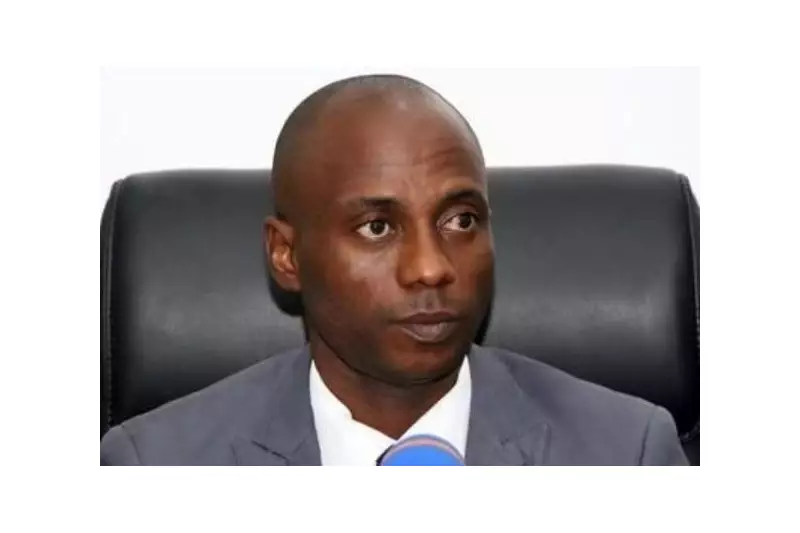
The Kogi State Government has strongly refuted allegations of Local Government funds diversion currently under investigation by the Economic and Financial Crimes Commission (EFCC), describing the claims as completely unfounded and politically driven.
Government's Firm Rejection of Allegations
During a press briefing held in Abuja on Monday, November 24, 2025, the State Commissioner for Information and Communications, Kingsley Femi Fanwo, categorically denied all accusations, labeling them as "baseless, unfounded and politically sponsored." He maintained that Kogi State operates one of Nigeria's most transparent local government financial systems.
Fanwo asserted that the petition submitted by a coalition of civil society organizations represents a deliberate attempt to damage the state's reputation and smear Governor Usman Ododo through what he characterized as completely fabricated claims.
The Civil Society Petition Details
Three civil society groups—African Transparency Initiative (ATI), Community Outreach for Development and Welfare Advocacy (CODWA), and Concerned Kogi State Citizens—had previously petitioned the EFCC on November 18, 2025, alleging widespread diversion of Local Government funds through what they termed the "Lokoja Voucher Scheme."
The petition, which was copied to several federal oversight institutions, contained multiple serious allegations:
- Funds were allegedly siphoned through fabricated vouchers and contracts for non-existent projects
- Shell companies owned by politically exposed persons received substantial sums
- Local Government officials were compelled to sign documents without proper Bills of Quantity, tenders, or site verification
- Fraudulent vouchers were processed monthly, draining council funds before reaching communities
- 95% of the Local Government Service Commission's 1% monthly allocation was allegedly "re-looted" through non-tendered contracts
The petitioners claimed these actions violated multiple Nigerian laws, including the EFCC Act, ICPC Act, and the Money Laundering (Prevention and Prohibition) Act. They demanded a forensic audit of all Local Government accounts from January 2024, identification and prosecution of complicit officials, recovery of diverted funds, and implementation of reforms to safeguard Local Government autonomy.
Government's Counter-Arguments and Transparency Claims
Commissioner Fanwo firmly maintained that "not a kobo" of Local Government allocation is tampered with by the state government. He emphasized that all 21 Local Government councils in Kogi State receive their full statutory allocations and independently determine their expenditures, contracts, payroll, and development priorities in accordance with constitutional provisions.
Fanwo accused the petitioners of acting on behalf of political interests that "believe power should be determined by place of birth rather than competence," claiming the CSOs had failed to produce any concrete evidence beyond "media noise, political rhetoric and sensationalism."
"This is not activism for accountability; it is a coordinated campaign to drag the name of the Governor and Government of Kogi State into fabricated claims," Fanwo stated. "They have provided no proof whatsoever. If they have facts, let them produce them."
The commissioner highlighted that all 21 Local Government councils in Kogi State publish their monthly financial statements on the government's website, challenging petitioners to identify any Nigerian state with a more transparent Local Government reporting system.
Local Government Achievements Cited
Fanwo, alongside the Association of Local Governments of Nigeria (ALGON) chairman in the state, outlined what they described as verifiable achievements of the Local Government councils, including:
- 100% payment of salaries and pensions with ongoing defrayment of long-abandoned gratuities
- Construction and renovation of Primary Healthcare Centers, including staff quarters, solar-powered water systems, and new clinics
- Rehabilitation and construction of rural roads, including repairs to earth-moving equipment
- Installation of transformers across hundreds of communities in partnership with the Ministry of Rural and Energy Development
The Kogi State Government remains firm in its position that the allegations represent nothing more than a politically motivated attack lacking any substantive evidence.