
Nigeria's long-standing debate over local government autonomy reached a pivotal moment with the Supreme Court's landmark 2024 judgment, yet practical implementation continues to face significant obstacles according to governance experts.
The Historic Ruling and Its Promise
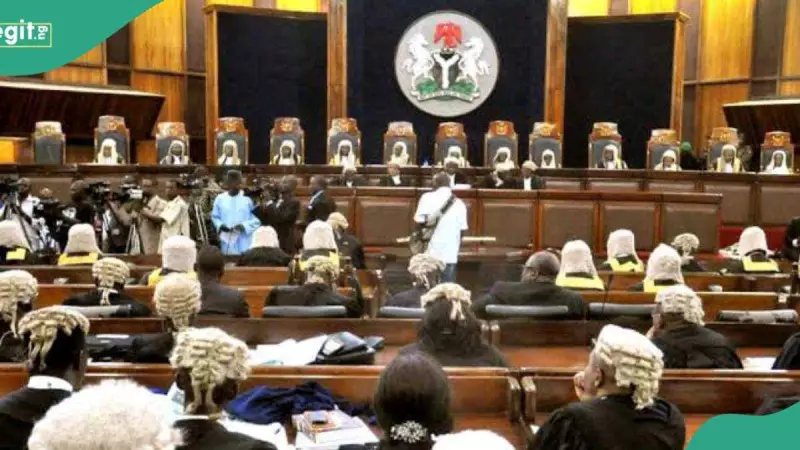
On July 11, 2024, Nigeria's Supreme Court delivered a groundbreaking judgment affirming the financial autonomy of all 774 local government councils across the nation. The court ruled that direct allocation of funds from the Federation Account to local governments was constitutional, effectively ending the decades-long practice where state governors controlled disbursements through joint state-local government accounts.
This decision was widely celebrated as a victory for grassroots democracy and development, potentially freeing up funds for critical services like local road maintenance, market development, sanitation, and other community-focused projects outlined in the Constitution's Fourth Schedule.
Implementation Challenges Emerge
Despite the judicial victory, Professor Kazeem Oyedele Lamidi of Obafemi Awolowo University identifies several major hurdles preventing full realization of local government autonomy. Political resistance from state governors remains a primary concern, with many reluctant to relinquish control over local government finances.
Constitutional ambiguity presents another significant challenge. The 1999 Nigerian Constitution still treats local governments as creations of states, granting governors substantial oversight powers that conflict with the spirit of the Supreme Court ruling. This has enabled states like Anambra to pass local government administration laws that maintain state control over allocations despite表面上 complying with the judgment.
Theoretical Pathways Forward
Several governance theories offer solutions to the current impasse. Decentralization theory emphasizes the need for constitutional clarity defining local governments as a distinct third tier of government rather than administrative extensions of states.
Fiscal federalism principles suggest establishing mechanisms for financial transparency and oversight, while good governance theory advocates for citizen participation through town hall meetings and participatory budgeting. Public choice theory highlights the importance of creating institutional checks and balances to prevent political capture of local institutions.
Professor Lamidi concludes that true local government autonomy requires holistic reforms combining constitutional amendments, political commitment, and institutional strengthening. Without these complementary measures, the Supreme Court's landmark judgment risks remaining a theoretical victory rather than a practical improvement in grassroots governance.




