United States President Donald Trump has officially ended the longest government shutdown in American history by signing crucial legislation that restores operations across federal agencies.
The Breakthrough Vote and Presidential Action
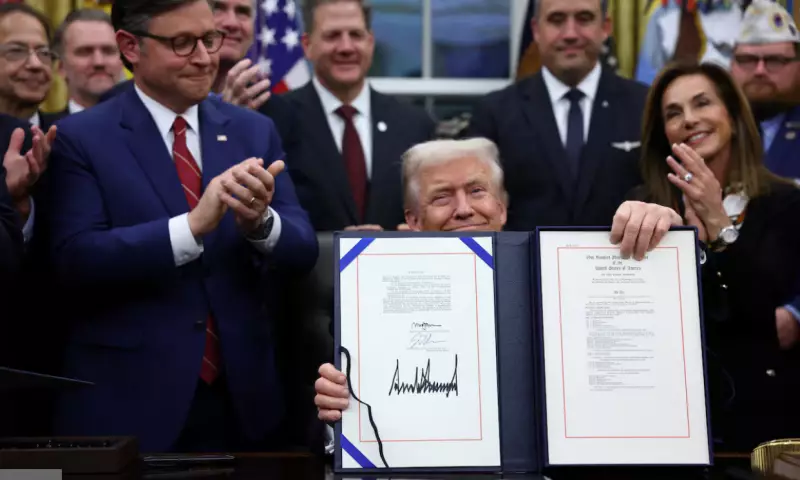
The Republican-controlled House of Representatives passed the funding package with a vote of 222-209, demonstrating strong party unity behind President Trump despite opposition from House Democrats. The President signed the bill into law during a late-night ceremony in the Oval Office, bringing closure to a 43-day standoff that had paralyzed many government functions.
Trump used the signing occasion to criticize Democratic opponents, stating "We can never let this happen again" and emphasizing that "This is no way to run a country." The legislation enables hundreds of thousands of federal employees who had been idled since the shutdown began to return to their jobs as early as Thursday.
Immediate Impacts and Economic Consequences
The resolution comes at a critical time, with the Thanksgiving holiday travel wave just two weeks away. The restoration of air-traffic control systems and other aviation services provides hope for smoother travel during this peak period.
Millions of families will see their food assistance programs restored, potentially freeing up household budgets as the Christmas shopping season approaches. The flow of economic data from key statistical agencies will also resume, ending an information blackout that had left investors and policymakers in the dark about job market conditions, inflation trends, and overall economic growth.
However, some data gaps may become permanent, with the White House indicating that employment and Consumer Price Index reports covering October might never be released. Economists estimate the shutdown reduced gross domestic product by more than a tenth of a percentage point during each of the approximately six weeks it lasted.
Political Fallout and Public Perception
The shutdown conclusion arrives eight days after Democrats won several high-profile elections, which many in the party believed improved their chances of extending health insurance subsidies set to expire at year-end. While the deal establishes a December vote on these subsidies in the Senate, House Speaker Mike Johnson has made no similar commitment in the House.
Republican Representative David Schweikert offered a colorful assessment of the political drama, comparing it to a popular 1990s sitcom: "I feel like I just lived a Seinfeld episode. We just spent 40 days and I still don't know what the plotline was."
According to a Reuters/Ipsos poll released on Wednesday, 50% of Americans blamed Republicans for the shutdown, while 47% blamed Democrats, indicating neither party emerged with a clear victory in public opinion. The funding agreement extends through January 30, meaning the federal government continues adding approximately $1.8 trillion annually to its existing $38 trillion debt.