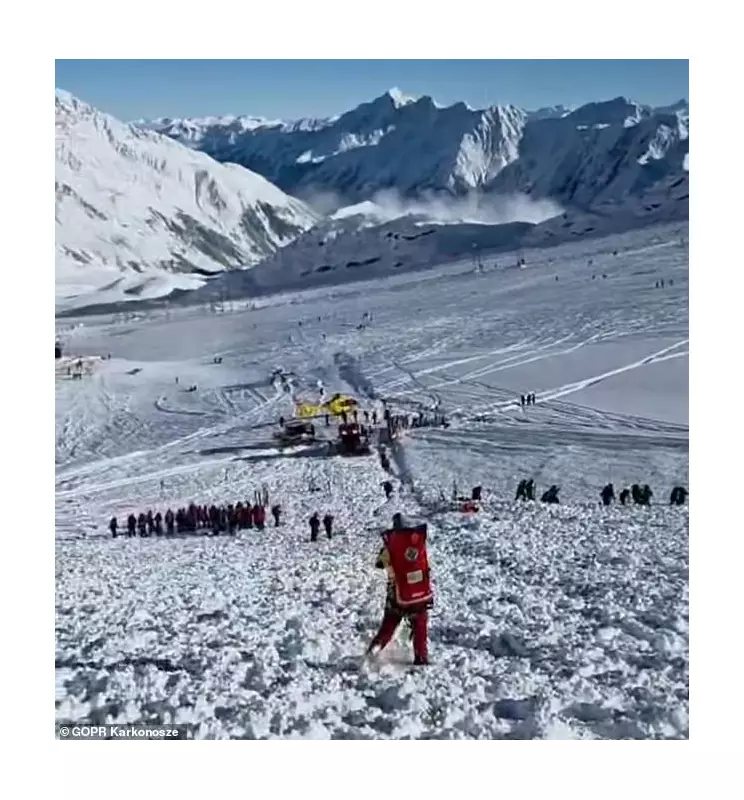
A major disaster struck one of Austria's premier ski destinations on Thursday, November 27, when a massive avalanche swept through the Stubai Glacier region, burying multiple skiers under tons of snow and triggering one of the largest rescue operations in recent Austrian history.
Timeline of the Disaster
The avalanche struck at approximately 9:30 AM on Thursday morning in open terrain near the Daunscharte pass, an area located outside the marked ski pistes on the Stubai Glacier. According to official reports, several skiers were present in this off-piste area at the time of the incident.
Authorities confirmed that the avalanche was triggered by the skiers themselves who were navigating the unsecured terrain. The snowslide also impacted a lower section of piste 9 at the resort, which was immediately closed for safety reasons as rescue operations began.
Rescue Efforts and International Response
Local media reports indicate that at least nine people who were partially buried in snow have been rescued from the avalanche site. Three of these survivors required urgent medical attention and were airlifted to nearby hospitals via medical helicopters.
The scale of the rescue operation is substantial, with approximately 250 search and rescue personnel deployed to locate additional victims. The operation includes:
- Mountain rescue teams from Neustift im Stubai and Sölden
- Search dogs specially trained for avalanche response
- German military soldiers providing support
- Polish mountain rescue teams joining the effort
- Multiple helicopters including police and medical aircraft
Ski resort operators noted that several avalanche airbags were seen deployed during the incident. These specialized safety devices are designed to help wearers float to the surface of snowdrifts during avalanches, potentially saving lives.
Weather Conditions and Safety Implications
The tragic incident occurred amid challenging weather conditions that had developed over recent days. The area experienced heavy snowfall combined with high winds, creating dangerous avalanche conditions.
Meteorological reports indicate this weather combination resulted in more than two feet of fresh snow accumulating atop existing snowpack in the region. Such conditions significantly increase avalanche risk, particularly in off-piste areas where snow stability is less monitored.
As rescue operations continue, authorities are reminding skiers of the importance of staying within marked boundaries and checking avalanche warnings before venturing into unsecured terrain. The incident serves as a sobering reminder of the powerful forces of nature that can transform popular recreational areas into danger zones within moments.