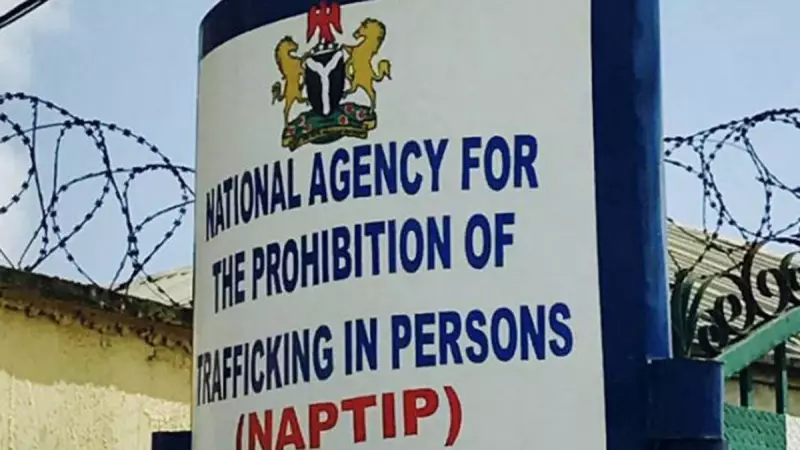
The National Agency for the Prohibition of Trafficking in Persons has announced a major escalation in its campaign against Sexual Gender Based Violence offenders across Nigeria. During a World Press Conference in Abuja marking the commencement of the 16 Days of Activism Against GBV, the agency's Director General delivered a stern warning to perpetrators.
Strong Enforcement Actions Yield Results
Director General Binta Bello revealed that NAPTIP has successfully secured convictions for over 40 SGBV offenders, with numerous additional cases progressing through various judicial stages. Among the significant achievements she highlighted were two life imprisonment sentences, including the recent conviction of a 19-year-old school teacher from Kwali who raped his 9-year-old pupil.
"In the coming season, we shall be fine-tuning our implementation strategies to tighten the noose on the offenders," Bello declared emphatically. "The simple message is that it will not be rosy for any perpetrator in Nigeria in the coming season. This is a promise from NAPTIP!"
Focus on Digital Violence and Expanded Reach
The 16 Days of Activism, an international campaign running from November 25 to December 10, aims to galvanize action against violence targeting women and girls worldwide. This year's United Nations-led initiative specifically addresses the growing concern of digital violence against women and girls.
Speaking on this year's theme 'Unite to End Digital Violence Against all Women and Girls', Bello emphasized that "It serves as a powerful reminder of our collective obligation to eliminate violence against women and girls, and to promote equality, dignity, and human rights."
The agency plans to significantly expand its awareness campaigns to reach vulnerable populations in hard-to-access areas. NAPTIP will also revamp its advocacy approaches to better resonate with digital spaces and specifically target the "Gen-Z demographic."
Collaborative Approach to Combat GBV
Bello stressed that ending gender-based violence requires collective effort beyond government action. "Ending gender-based violence is not the responsibility of the government alone. We call on every Nigerian to join us in this fight," she appealed. "Together, through sustained advocacy, legal enforcement, societal change, and personal responsibility, we can build a Nigeria where every woman and girl lives free from violence and fear."
International support for Nigeria's anti-GBV efforts was reaffirmed during the event. Both the International Centre for Migration Policy Development and the UN International Organisation for Migration pledged continued assistance in tackling human trafficking and gender-based violence.
Mathias Esene, Project Manager for ICMPD's Netherlands-funded TIP Project, highlighted the interconnected nature of these challenges. "This speaks directly to the reality that no single institution can address gender-based violence and trafficking in persons," he noted, emphasizing the need for coordinated action across justice, security, migration, and protection systems.
Sharon Dimache, IOM's Chief of Mission in Nigeria, identified human trafficking as a critical form of GBV within the Nigerian context, affecting thousands of vulnerable individuals, particularly women and girls. She emphasized that "preventing trafficking requires sustainable investment; investment in economic empowerment for women and youth, in education, in safe migration pathways, and in strong protection services."
Both international organizations commended NAPTIP's leadership and dedication in confronting these complex challenges head-on, signaling strong international support for Nigeria's intensified campaign against gender-based violence.