Former Military Leaders Condemn FCT Minister's Confrontation with Naval Officer
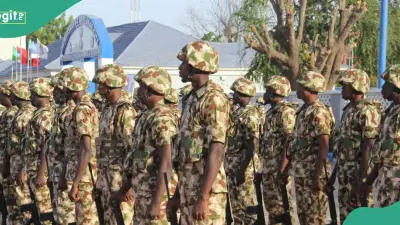
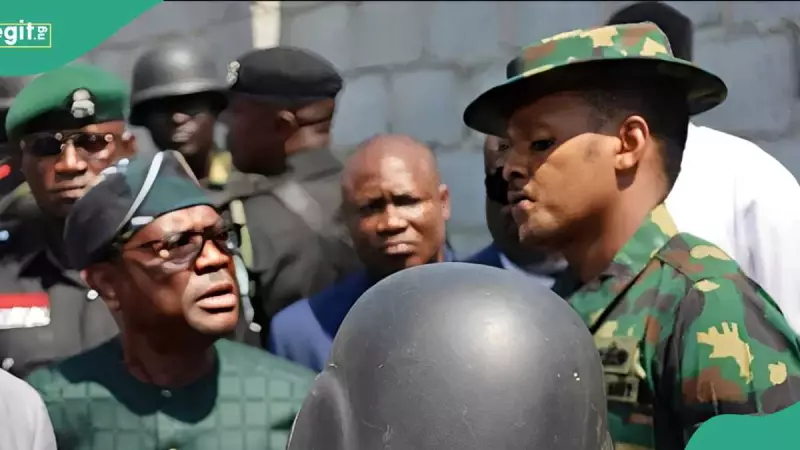
Senior retired military officers have voiced strong condemnation against Federal Capital Territory Minister Nyesom Wike following his public confrontation with a naval officer during a land dispute in Abuja. The incident, which occurred on Tuesday, November 11, 2025, has sparked significant controversy within military circles and prompted immediate government action.
Defence Ministry Launches Formal Investigation
Minister of Defence Mohammed Badaru confirmed that his ministry has initiated a thorough investigation into the altercation between Wike and Naval Officer A. Yerima. Speaking during a briefing at the National Defence College in Abuja, Badaru addressed the incident while discussing preparations for the 2026 Armed Forces Remembrance Day.
The Defence Minister praised the naval officer's composure during the face-off and provided assurance that the Armed Forces would defend personnel who are performing lawful duties. He emphasized that the investigation would determine the appropriate next steps in resolving the matter.
Retired Generals Express Outrage Over Minister's Conduct
Former Chief of Army Staff Lt. Gen. Tukur Buratai (retd.) described Wike's behavior as disrespectful and potentially threatening to national security. Buratai stated that the minister's actions transcend mere misconduct and fundamentally undermine the chain of command. He called for Wike to issue formal apologies to President Bola Tinubu, the Armed Forces, and the officer involved in the incident.
Retired Brigadier General Peter Aro characterized the clash as reflecting poor adherence to democratic principles. He explained that the naval officer was acting under lawful instructions from a superior officer and emphasized that Wike should have channeled his grievances through appropriate government channels rather than engaging in a public confrontation.
A minister has the right to question land ownership, but not by humiliating a uniformed officer on duty, Aro stated in his assessment of the situation.
Another retired officer, Brigadier General Bashir Adewinbi, joined the criticism by describing Wike's conduct as unacceptable behavior from a government minister. He emphasized that any confrontation with a military officer effectively constitutes disrespect toward the Commander-in-Chief.
Conflicting Legal Opinions Emerge
Constitutional lawyer Prof. Sebastine Hon supported Wike's legal authority in the matter, noting that the minister represents the President in land affairs within the Federal Capital Territory. He argued that Officer Yerima acted outside legal boundaries by obstructing a public official performing official duties.
However, Senior Advocate of Nigeria Simon Lough found fault with both parties involved. He suggested that Wike should have handled the dispute through formal correspondence and established protocols rather than direct confrontation.
Human rights lawyer Pelumi Olajengbesi maintained that the minister's actions were reckless, pointing out that civilian ministers lack direct authority to issue commands to military personnel. He warned that such confrontations, if left unchecked, could escalate tensions between political leaders and the Armed Forces.
Wike's Defense of His Actions
Meanwhile, Wike's aide, Lere Olayinka, defended the minister's intervention, explaining that the disputed land in Mabushi was originally designated for recreational purposes but had been illegally sold to private buyers, including former Chief of Naval Staff Vice Admiral Zubairu Gambo (retd.).
Olayinka insisted that Wike's actions were aimed at exposing fraudulent land transactions rather than engaging in a power struggle. The minister's team stated that he visited the site after receiving reports that military officers had driven away Federal Capital Territory Administration officials who were enforcing development control directives.
The incident has raised important questions about the balance between civil authority and military professionalism within Nigeria's democratic system. As the investigation proceeds, stakeholders across government and military institutions await findings that could establish important precedents for future civil-military relations.