
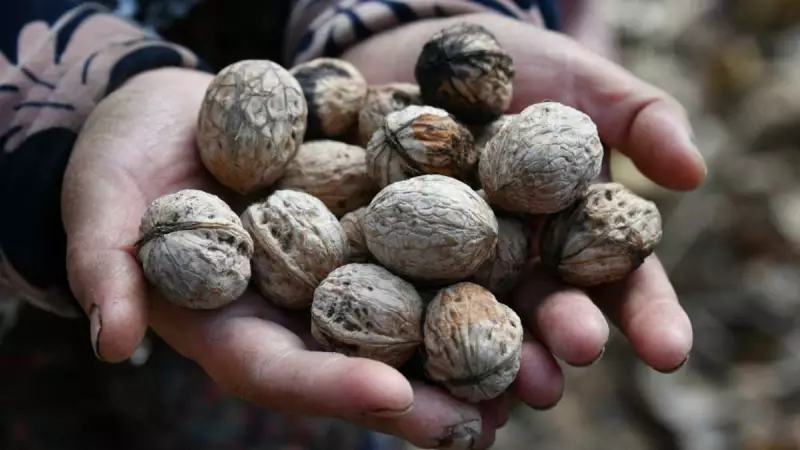
In the mountainous heart of Kyrgyzstan, a centuries-old tradition is facing an unprecedented threat. The world's largest natural walnut forest, located near the village of Arslanbob, is gradually disappearing, putting both an ancient way of life and the local economy at serious risk.
A Forest in Peril
For generations, residents have combed through the golden leaves of the Arslanbob forest each autumn, gathering walnuts that serve as both cultural heritage and economic foundation. However, this vital resource has been steadily declining for years, battered by a combination of environmental and human pressures.
"The forest used to be so dense but it has thinned out," lamented Asel Alisheva, a 70-year-old pensioner from the village officially known as Arslanbap. Having foraged in these woods for decades, she remembers when the forest was so thick it felt impossible to navigate. Today, she notes, the landscape has transformed dramatically with increased human activity making the woods more accessible but less abundant.
Climate Crisis and Economic Impact
The changing climate has become a central concern for those whose livelihoods depend on the walnut harvest. According to the World Meteorological Organization, average temperatures in Central Asia have risen by approximately 1.5 degrees Celsius since 1991 – twice the global average. This warming trend, accompanied by more frequent droughts, has directly affected both the quantity and quality of the walnuts.
At the bustling village market, the decline is measurable. Seller Zhazgul Omurzakova, 47, reported that daily walnut quantities have plummeted from up to 15 tonnes in the 2000s to just three or four tonnes today. "The climate is getting hotter and drier every year, and the nuts are losing their quality, turning red inside," she explained, noting that whiter kernels command higher prices from pastry-makers.
For picker Arno Narynbaeva, 53, the walnuts represent survival. "This is how we make a living. There are no other ways, only walnuts. This is how we feed our children," she told reporters, having harvested nuts since childhood. She described how hot weather causes walnuts to fall prematurely, burn, and turn black – phenomena previously unseen in her experience.
Multiple Threats to Ecosystem
Beyond climate change, the forest faces additional challenges from human activity. Chief forest ranger Ibragim Turgunbekov identified livestock overgrazing as a significant problem, with expanding cattle herds trampling soil and consuming young shoots. Illegal logging has also taken its toll, as locals often prefer cutting trees over purchasing more expensive coal for firewood.
Conservation efforts face their own obstacles. Temir Emirov, who works in the Arslanbob forest nursery, described how water shortages have hampered reforestation initiatives. "Over the past two to three years, there has been no rain, and it has become hot," he said, explaining that seedlings have been forced to survive on their own moisture without irrigation for extended periods.
The region's forestry expert Zakir Sarymsakov emphasized the global significance of this ecosystem, noting that nowhere else in the world exists such a large concentration of natural walnut forests with their vast variety of species.
Seeking Sustainable Solutions
Local authorities and community members are exploring various approaches to preserve their natural heritage. Ranger Turgunbekov issues fines to illegal loggers and encourages farmers to reduce herd sizes. Religious leaders have joined the effort, with local imams urging their congregations to help protect the walnut trees.
Some advocate for more substantial measures, including taxes on surplus livestock and government bans on grazing near settlements. Turgunbekov envisions economic solutions that would increase the walnuts' value through processing into premium products like perfumes or oils for European markets.
The younger generation shows promising initiative. Abdulaziz Khalmuradov, a 16-year-old aspiring entrepreneur, already produces walnut oil using traditional presses after school. "I want to increase the number of machines and produce not only walnut oil but also many other types, such as apricot oil," he shared, expressing ambitions to develop sustainable tourism in the region.
As climate change accelerates and traditional practices face modernization pressures, the future of the world's largest walnut forest hangs in the balance. The community's ability to adapt while preserving their natural heritage will determine whether this unique ecosystem can survive for future generations.




