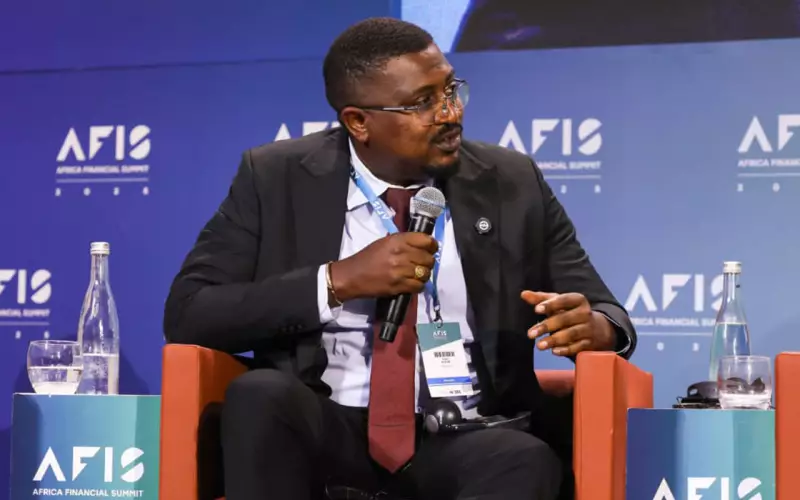
The Chief Executive Officer of VivaJets, Chukwuerika Achum, has made a powerful appeal for a continent-wide overhaul of Africa's aviation sector. He is calling for governments, regulators, and financial bodies to unite in removing the deep-seated operational hurdles that are holding back the industry's growth and global competitiveness.
Achum delivered this urgent message during a session at the Africa Financial Summit (AFIS 2025) on 15 November 2025. He detailed the structural problems that have plagued aviation operations across Africa for years.
Key Barriers to a Connected Africa
Achum pinpointed a critical issue: a severe lack of trust among African businesses. He revealed that when VivaJets operates in other African nations, vendors often demand cash payments upfront. In stark contrast, European operators are routinely granted 30-day credit terms. "The trust currency is very low in Africa," Achum stated. "That imbalance tells you everything about how we trust, or don't trust ourselves."
He also highlighted the paradox of visa restrictions for airline crews. Despite clear international standards set by the International Civil Aviation Organization (ICAO) in Annex 9, which grants facilitation for crew members, Nigerian crews still require visas to enter certain African countries like Morocco. "There’s no clear explanation why an African crew needs a visa to access another African nation," he argued.
Operational Inefficiencies and High Costs
The VivaJets CEO further criticized the inconsistent and slow regulatory processes for permits. He gave the example that to fly from Lagos to Addis Ababa, an airline must apply for a landing permit that can take up to 72 hours to be processed, with no transparent criteria for approval.
Another major financial burden is the cost of insurance. Achum explained that while Nigerian regulations mandate domestic insurance for local assets, reinsurers in London still charge an extra premium for African-based aircraft. This layered cost directly disadvantages African operators compared to their Western counterparts.
Currency conversion presents yet another challenge. "Operating in Africa means paying twice for every transaction," Achum noted, "once to convert to U.S. dollars and again to convert into local currencies." He added that current paper agreements have not yet solved this persistent problem.
A Call for Coordinated Action and Hope for the Future
Despite the array of challenges, Achum expressed optimism about Africa's potential. He acknowledged improvements in navigation and regional cooperation but insisted that real progress hinges on specific actions.
He urged stakeholders to focus on policy harmonization, standardizing permit processes, and strictly enforcing ICAO Annex 9 to ease crew movement. He also advocated for building local insurance capacity, establishing stronger credit systems for African businesses, and simplifying cross-border payment mechanisms.
"Africa’s skies should connect us, not divide us," Achum concluded. "We have the people, the planes, and the passion. What we need now is trust, coordination, and courage to reform."