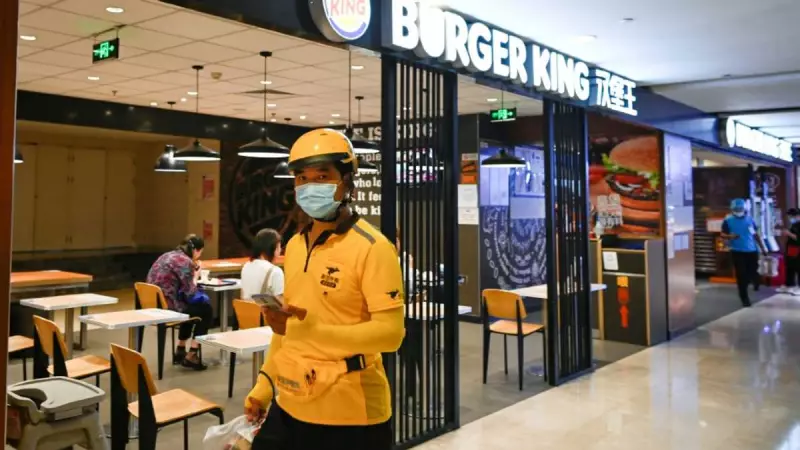
In a bold move to capture a larger share of the competitive Chinese market, the parent company of Burger King has announced a major strategic shift. Restaurant Brands International (RBI) is forming a new joint venture for its China operations, a deal powered by hundreds of millions of dollars in local investment.
A New Blueprint for Growth
The Florida-based hamburger giant, which first entered China in 2005, has consistently trailed behind its global rivals, McDonald's and KFC. To change this dynamic, RBI is selling a controlling stake to create Burger King China. The venture will receive a substantial investment of $350 million from Beijing-based private equity firm CPE.
According to a statement released on Monday, these funds are earmarked to "support restaurant expansion, marketing, menu innovation, and operations." This financial backing is the engine for an aggressive expansion plan that aims to double the number of Burger King restaurants in China within the next five years.
Chasing the Competition in a Tough Market
The ambitious plan highlights the intense competition in the world's second-largest economy. International brands like Burger King are recalibrating their strategies in response to a persistent spending slump and the rapid digitalization of consumer services.
Despite two decades in the country, Burger King's footprint is modest compared to its competitors. The company hopes to grow its network to more than 4,000 locations by 2035. This goal is set against a backdrop of established dominance by others:
- McDonald's operated more than 6,800 stores in mainland China last year.
- KFC, under its local operator Yum China, had a staggering 12,600 stores as of September this year.
A Strategic Shift and Broader Trend
Once the transaction is finalized, the ownership structure will see CPE holding approximately 83 percent of Burger King China, with RBI retaining the remaining stake. This model of localizing control is becoming a common strategy for Western brands navigating the complex Chinese market.
"China remains one of the most exciting long-term opportunities for Burger King globally," said Joshua Kobza, CEO of RBI. "Our recent investments and this joint venture underscore our confidence in the Chinese market."
This move by Burger King follows a similar announcement last week by Starbucks, which revealed plans to sell a controlling stake in its China retail operations. After more than 26 years in the country, the coffee chain is also adapting its approach to compete with a new generation of local competitors.