
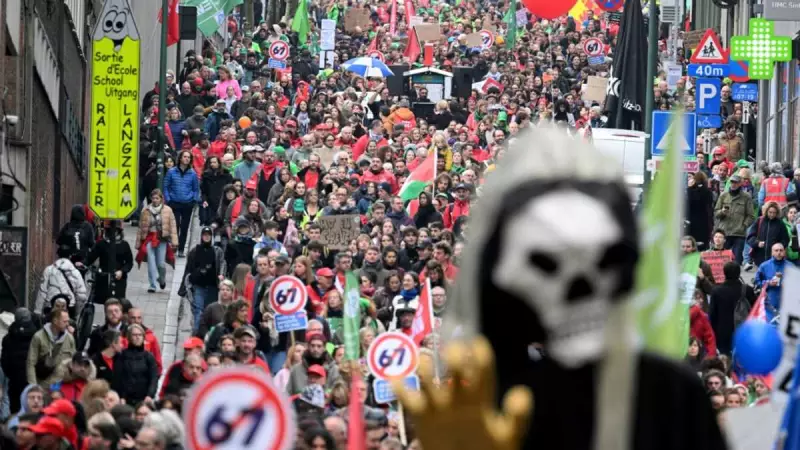
Belgium is preparing for widespread disruption as major trade unions have called for a three-day national strike, starting Monday, to protest against the government's proposed austerity measures and changes to labour laws.
Three Waves of Industrial Action
The strikes are planned to unfold in three distinct phases, each targeting a different sector of the economy. On Monday, the industrial action will hit the transport sector, with trains and public transport services experiencing significant reductions. The national railroad company, SNCB, anticipates running only two out of every three trains, with some lines reduced to just one-third of their normal service. Several Eurostar services connecting Brussels to Paris have been cancelled.
Tuesday will see public services join the strike. This includes schools, creches, and hospitals, which are expected to face closures and operational challenges as staff walk out.
The climax of the protests is scheduled for Wednesday, with a full general strike called across all sectors. The impact will be most severe at the country's two main airports, Bruxelles-Zaventem and Charleroi, where no flights are expected to operate.
A Standoff Over Austerity and Debt
The industrial action stems from a major stand-off between Belgium's main unions and the country's Prime Minister, Bart De Wever. The Flemish conservative leader, in power since February, is attempting to implement a series of unprecedented structural reforms to tackle one of the largest national debt piles in Europe, comparable to those of Greece, Italy, and France.
His proposed austerity effort includes plans for labour market liberalisation, changes to unemployment benefits, and pension reforms. However, progress has been slow due to significant divisions within his five-party coalition government. De Wever has reportedly given his coalition until Christmas to reach an agreement, which also includes finding spending cuts to fund an increase in the military budget.
Unions Accuse Government of Contempt
The unions have stated that the strike is intended to pressure the negotiating parties within the coalition. In a press release, they described the action as an appeal to the Prime Minister and the entire government to halt what they call the dismantling of social programs.
The socialist union FGTB has gone further, accusing Prime Minister De Wever of showing contempt and disrespect towards the social movement. In response, the Prime Minister's entourage has declined to comment on the situation.
This is not the first major protest against the government's fiscal plans. The unions' earlier efforts saw some success, with tens of thousands of protesters marching through the streets of Brussels in mid-October to demonstrate against what they labelled as brutal budget cuts.




