
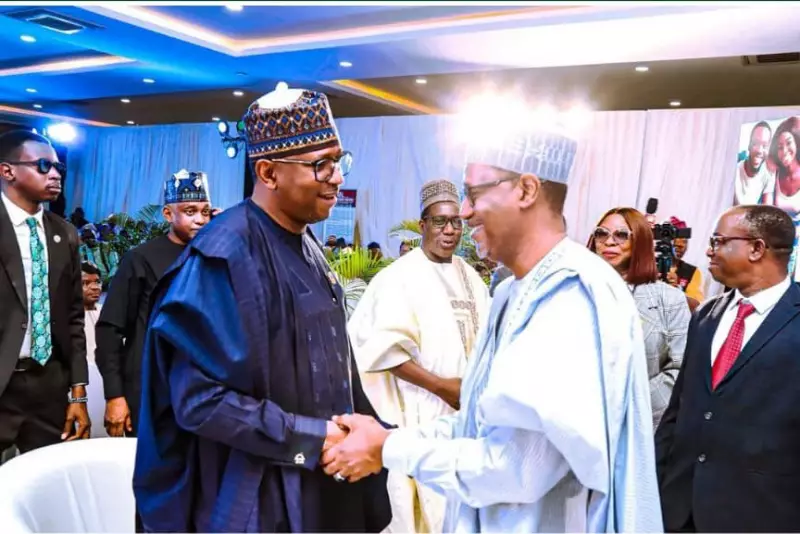
The Federal Government has issued a strong directive to quantity surveyors across Nigeria, emphasizing the critical need for enhanced cost control and value optimization in national infrastructure projects. This charge came during the recent 2025 NIQS Biennial Conference and General Meeting held in Abuja.
Government Demands Fiscal Discipline in Infrastructure
Vice President Kashim Shettima, represented by Special Adviser on Economic Affairs Tope Fasua, declared that Nigeria can no longer tolerate project wastage, financial leakages, or inflated contract costs. The administration's bold fiscal reforms must be supported by strict discipline in public expenditure, procurement processes, and project implementation.
Shettima described quantity surveyors as professionals entrusted with cost management, value assurance, and financial discipline in public resource stewardship. He emphasized that the government needs partners rather than mere contractors, specifically calling for professionals of conscience who will speak truth to power and protect public costs with realistic zeal.
Infrastructure as National Development Catalyst
The Vice President outlined the administration's infrastructure priorities, which serve as catalysts for job creation, industrialization, and enhanced national competitiveness. Ongoing efforts include strengthening transport corridors, expanding energy infrastructure, investing in housing projects, revitalizing water and sanitation systems, and improving digital connectivity nationwide.
To ensure optimal value for money, Shettima highlighted several critical measures: strengthening procurement governance frameworks, adopting AI-enabled project monitoring systems, enforcing transparent benchmarking practices, and developing advanced digital cost management systems. The government plans to deepen collaboration with NIQS in establishing a comprehensive national infrastructure cost database that will eliminate arbitrary pricing in public projects.
Shift from Projects to Systems Building
Shettima cautioned strongly against abandoned projects, inflated contracts, and variations disguised as cost overruns. He stressed the fundamental shift required from building individual projects to building integrated systems, driven by data analytics, comprehensive planning, and results-based execution methodologies.
The Vice President called for a new generation of professionals courageous enough to challenge reckless estimates, resist pressure to compromise ethical standards, and uphold the sanctity of public trust. Beyond technical expertise, he urged experienced practitioners to mentor younger surveyors, instilling values that safeguard national resources effectively.
Building Nigeria is not just a policy agenda but a moral duty, Shettima affirmed, reiterating the government's commitment to creating an infrastructure landscape free of corruption, where projects are delivered on time, within budgets, and where fiscal reforms translate to better roads, safer cities, functional schools, vibrant industries, and a stronger economy.
Minister Emphasizes Procurement Transparency
Minister of Housing and Urban Development, Ahmed Dangiwa, echoed these sentiments, noting that Nigerians expect better utilization of public funds, especially during the current economic transition period. He urged quantity surveyors to uphold integrity and enhance procurement transparency, emphasizing that no national development effort can succeed without proper discipline, checks and balances, and professional judgment.
Dangiwa, an architect by profession, highlighted two major initiatives requiring NIQS guidance: the national urban renewal and slum upgrade program currently active in 150 locations nationwide, and the National Land Title Administration Programme. Both initiatives demand efficient design, realistic costing, and strict accountability measures.
NIQS Commitment to National Reforms
NIQS President, Mr Kene Nzekwe, described the conference theme as particularly timely given Nigeria's economic challenges, infrastructure gaps, and governance concerns. He noted that Nigeria stands at a critical juncture in its quest to diversify the economy, improve infrastructure, and enhance governance systems.
Nzekwe emphasized that quantity surveyors remain pivotal to national progress through their roles in cost management, procurement oversight, and project delivery. Their specialized skills can ensure optimal value for money and significantly improve living standards across the country.
Nigeria is turning the corner with far-reaching macro-fiscal reforms, Nzekwe observed, adding that sustaining these reforms and scaling up social protection for the poor and vulnerable is critical to putting the economy back on track. The NIQS is committed to embedding these reforms within its procedures to enhance service delivery and strengthen expert cost advisory functions for national development.




