
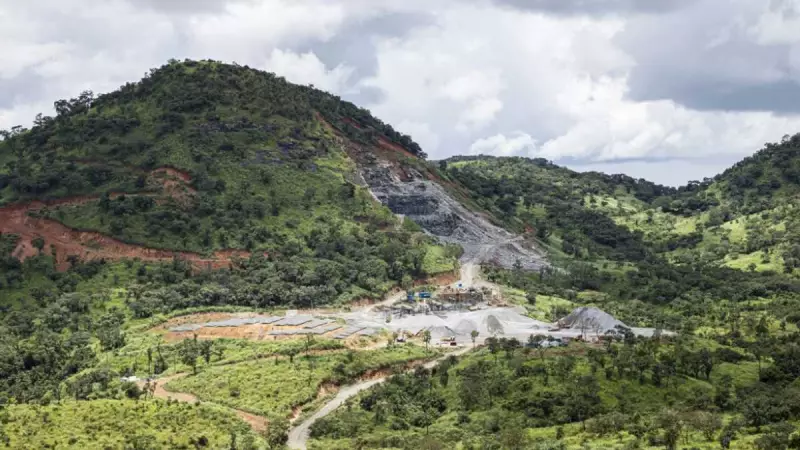
Guinea has officially commenced production at the massive Simandou iron ore mine, marking a historic moment that promises to transform the West African nation's economic landscape. The launch ceremony took place on Tuesday, November 11, 2025, at the port of Morebaya, south of Conakry.
Historic Launch Ceremony
The significant event was attended by Guinea's junta leader, General Mamady Doumbouya, who declared the day a public holiday to commemorate the milestone. Dressed in a white boubou tunic, the military leader watched as the project he helped push to completion was officially launched. The ceremony took place at the very port through which the iron ore will eventually be shipped to global markets.
General Doumbouya, who seized power in a 2021 coup, is now positioning himself as the leader who finally brought the long-delayed Simandou project to fruition. This achievement comes as he campaigns for president in the country's December 28 elections, despite earlier promises to return Guinea to civilian rule.
Massive Infrastructure Investment
The Simandou project represents one of the largest mining investments in African history. Industrial partners have spent approximately $20 billion developing the necessary infrastructure, including building more than 650 kilometers (400 miles) of railways and constructing a massive port facility at Morebaya.
The mountain range contains four main mining deposits, with two being developed by the Chinese-Singaporean group Winning Consortium Simandou (WCS) and the other two by SimFer, a consortium owned by mining giant Rio Tinto and Chinese company Chinalco.
Economic Transformation Ahead
Authorities hope the Simandou mine will propel Guinea into the ranks of the world's largest iron exporters. The project is expected to provide a steady stream of much-needed revenue for the country and has already resulted in infrastructure development that could help diversify the economy beyond mining.
The project represents several thousand direct jobs for Guineans, offering significant employment opportunities in a country where economic development has been challenging. The new railway and port infrastructure will also benefit other sectors of the economy by improving transportation networks across the region.
As production begins at Simandou, all eyes are on Guinea to see how this massive project will transform the nation's economic prospects and position in global markets.




