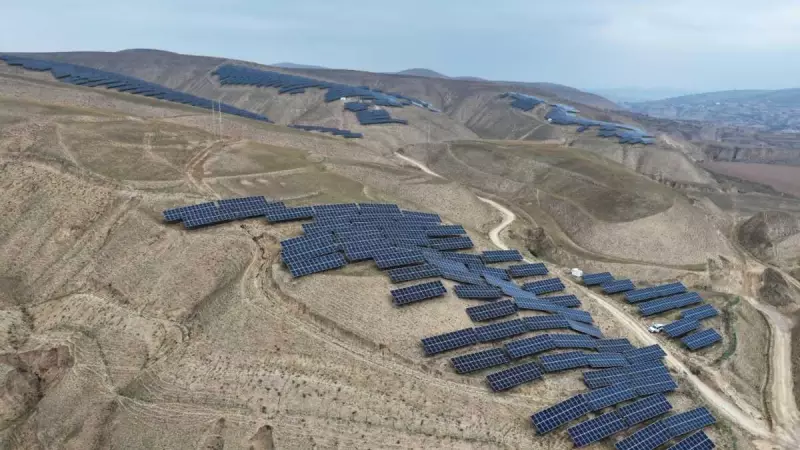
The global shift towards renewable energy is accelerating, outpacing the growth of fossil fuels even as policy changes in the United States create headwinds, according to a major new report. The International Energy Agency (IEA), in its annual World Energy Outlook published on Wednesday, November 12, 2025, stated that oil demand could peak 'around 2030'.
Global Trends Defy US Policy Shift
The Paris-based agency revealed that despite the Trump administration's efforts to roll back clean energy policies, renewables are the fastest-growing major energy source worldwide. 'The pace varies, but renewables grow faster than any other major energy source in all scenarios, led by solar photovoltaics,' the IEA confirmed in its 518-page report.
In one specific scenario, policy shifts mean the United States will have 30 percent less renewables capacity installed by 2035 compared to last year's forecast. However, this US slowdown is not stopping the global charge. The report was released as world leaders gathered for the COP30 climate conference in Belem, Brazil, an event boycotted by President Trump, who has also withdrawn the US from the Paris climate accord.
IEA Navigates Political Pressure
The agency faced significant political pressure while drafting this year's outlook. US Energy Secretary Chris Wright had threatened in July to pull out of the IEA if it did not reform its operations, criticizing its projections of dwindling fossil fuel demand. In response, the IEA reintroduced a 'Current Policies Scenario' (CPS), which it had dropped in 2020.
This scenario, which assumes no new climate policies are added, was labelled 'entirely politically motivated' by Rachel Cleetus of the Union of Concerned Scientists. Under the CPS, oil and gas demand would grow by 16 percent by 2035. In contrast, the more likely 'Stated Policies Scenario' (STEPS) projects global oil demand will peak around 2030 and fall to 100 million barrels per day by 2035.
China Leads, Warming Risks Rise
Electricity demand is surging globally, driven by data centres, artificial intelligence in advanced economies and China, and increased air conditioning use in developing nations. In every forecast, China remains the dominant force in renewables, accounting for 45 to 60 percent of global deployment over the next decade.
Despite the clean energy expansion, the IEA issued a stark warning on climate. The report concluded that under all scenarios, the world is set to exceed the critical 1.5°C warming limit from the Paris Agreement. In the worst-case CPS, warming would exceed 2°C around 2050 and reach 2.9°C by 2100. David Tong of Oil Change International noted the report shows that 'no single country can stop the energy transition', but also highlights the risks of a fossil-fuel intense future.