
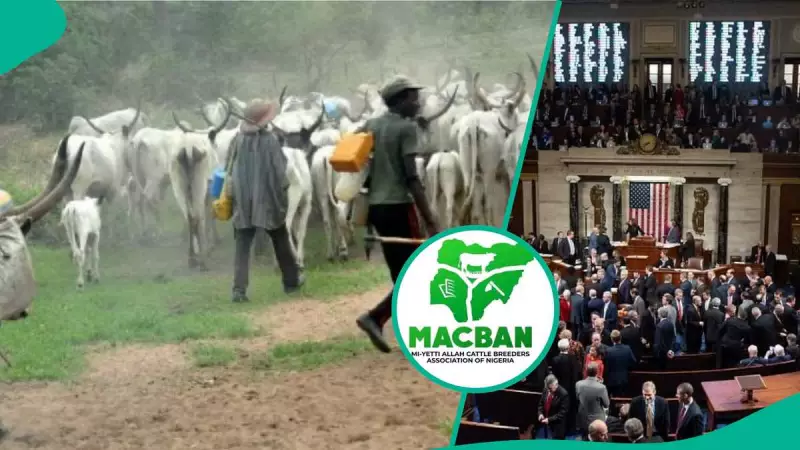
The Miyetti Allah Cattle Breeders Association of Nigeria has taken a significant step in international diplomacy by formally petitioning the United States Congress to remove its name from a proposed sanctions list that would classify the organization alongside terrorist groups.
Formal Protest Against US Resolution
MACBAN President Baba Othman Ngelzarma revealed during a press conference held on Sunday, November 16, in Abuja that the association has officially written to the U.S. Congress through the American Embassy. The protest targets the organization's inclusion in U.S. House Resolution 860, legislation that focuses on entities accused of violating religious freedom in Nigeria.
The controversial bill, sponsored by U.S. Congressman Christopher Smith, proposes severe consequences including visa bans and asset freezes against individuals and organizations deemed responsible for religious freedom violations under the U.S. International Religious Freedom Act.
Wrongful Association with Terror Groups
Ngelzarma expressed strong objection to MACBAN being listed alongside internationally recognized terrorist organizations including Boko Haram, ISIS-West Africa, the Taliban, and the Houthis as "Entities of Particular Concern." He emphasized that this classification represents a fundamental misunderstanding of the organization's nature and purpose.
"We are not a militia organization. We do not run armed wings, we do not sponsor violence, and we do not protect criminals. Any individual who commits a crime does so independently and must face justice," Ngelzarma stated unequivocally during the press conference.
Documented Evidence of Pastoralist Suffering
The MACBAN president presented verified records demonstrating the extensive suffering pastoralists have endured over the past decade. The documentation revealed staggering statistics:
- Over 18,600 pastoralists killed
- 1.29 million displaced
- 87,543 houses destroyed
- More than one million cattle rustled or killed
These incidents occurred between 2015 and 2025 across 17 Nigerian states, painting a clear picture of pastoralists as victims rather than perpetrators of violence.
Ngelzarma further highlighted the tragic consequences faced by MACBAN leadership, noting that several state chairmen and executives were assassinated specifically because of their cooperation with security agencies and peace-building institutions.
Peace Building Efforts and International Partnerships
Contrary to the allegations implied by the proposed sanctions, MACBAN has actively engaged in numerous peace-building initiatives with both national and international organizations. The association has collaborated with:
- Nigeria Police Force and Armed Forces
- NSCDC and NIPSS
- State peace-building agencies
- Traditional rulers
- International partners including USAID, Mercy Corps, Search for Common Ground, and the Centre for Humanitarian Dialogue
Ngelzarma warned that mischaracterizing MACBAN risks undermining years of mediation work and could potentially escalate conflicts in rural areas rather than contribute to their resolution.
Appeal for Evidence-Based Engagement
The association, which was registered with the Federal Government in 1986, maintains it has no history or organizational ties to extremism. Ngelzarma argued that U.S. lawmakers relied on "misleading and incomplete assertions" that blurred the lines between criminal elements operating in rural communities and peaceful, law-abiding pastoralists.
MACBAN has appealed to the U.S. Congress to review the resolution and remove its name from the proposed sanctions list. The organization urged Washington to embrace evidence-based engagement and support long-term solutions including:
- Grazing reserves development
- Rangeland restoration
- Veterinary services enhancement
- Educational programs
- Conflict-resolution initiatives
The group reiterated its commitment to peaceful coexistence, food security, and national stability, emphasizing that proper characterization of their organization is crucial for maintaining the delicate balance in Nigeria's security landscape.
The outcome of this petition could have significant implications for Nigeria-U.S. relations and the ongoing efforts to address security challenges in Nigeria's rural communities.




