Prominent Muslim leaders across Nigeria have issued a strong appeal to the government and citizens to actively protect religious freedom, emphasizing that maintaining peace, tolerance, and interfaith cooperation is crucial for the nation's stability and unity.
National Conference on Religious Freedom
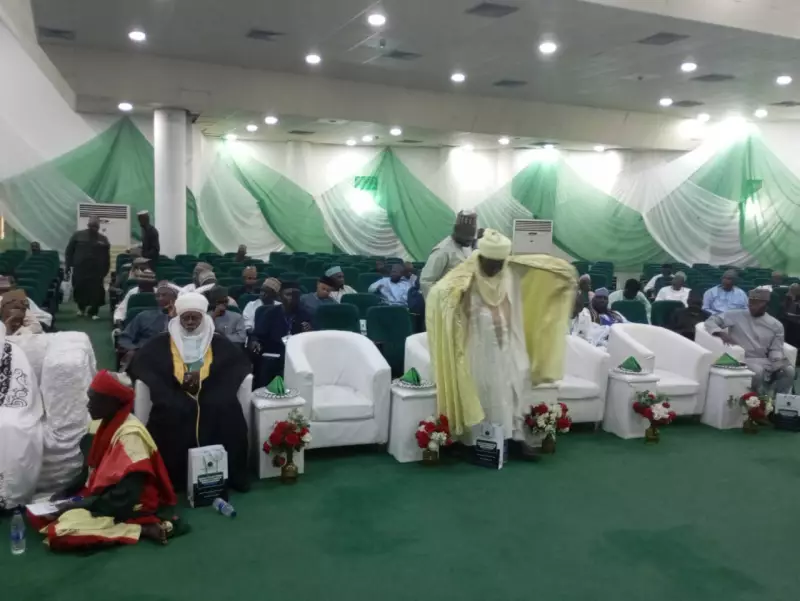
The urgent call was made during the National Muslim Leaders Conference on Freedom of Religion or Belief (FoRB) organized by Faith and Freedom Africa at the National Mosque in Abuja. The gathering brought together influential religious figures, academics, and traditional rulers who expressed deep concern about the current state of religious relations in the country.
Professor Muhammad Adam, one of the Chief Imams of the National Mosque, declared that Nigeria's diversity represents a divine gift that requires careful preservation. He specifically cautioned against external influences that could worsen existing divisions within the nation, stressing that every citizen bears responsibility for treating peace as sacred.
Drawing from Nigeria's historical experience with interfaith cooperation, Professor Adam stated unequivocally that "peace is a red line; without it, we cannot progress as a nation." He elaborated further, noting that "God in His infinite mercy created Nigeria and Nigerians in different tribes, regions, ethnicities, and religions, but He placed us together in one country. It is our duty to maintain peace."
Warnings Against External Interference and Misinformation
The cleric delivered a sobering reminder by referencing the Rwanda genocide, stating it demonstrates what occurs when a nation fails to protect all its people regardless of their faith. "Do not allow outside forces to come and disrupt our unity," he urged participants. "Here, we must learn to recognize ourselves as one."
Professor Ahmad Dogarawa of Ahmadu Bello University in Zaria addressed Nigeria's deteriorating international reputation, attributing it to both misinformation and internal disunity. He observed that many Nigerians contribute to the country's negative portrayal through their own actions and statements.
"Many of us are not patriotic, but Nigeria is our only homeland," Professor Dogarawa remarked. "We must promote peaceful coexistence, mutual respect, and tolerance." He specifically advised religious leaders to avoid inflammatory rhetoric, emphasizing that "using speeches to incite fear or hatred among followers is not taught by any religion."
The academic highlighted the shared values across major faiths, noting that "The Quran and the Bible alike counsel restraint, truth, and moral guidance." He reminded clerics of their moral covenant with congregants and the importance of upholding this sacred trust.
Constitutional Rights and Media Responsibility
Felix Samari, Country Representative of Faith and Freedom Africa, clarified that Freedom of Religion or Belief is not an imported concept but a constitutional right explicitly guaranteed in Section 38 of Nigeria's 1999 Constitution. He called on religious leaders to champion this cause, given their moral authority and influence within communities.
Samari stressed that religious leaders must take ownership of the discourse surrounding religious freedom rather than allowing external voices to shape Nigeria's narrative. He emphasized their critical role in leading the nation toward a clearly defined agenda for FoRB implementation and protection.
Navy Captain Gidado Taofik, Chief Imam of the defence headquarters, expressed concern about the persistent misrepresentation of Islam in public discourse and media coverage. He lamented that media narratives often unfairly associate Islam with criminal activities, which ultimately undermines both national unity and security.
"Whenever a Muslim commits a crime, it should be attributed to the individual, not the religion," he asserted. "You cannot say Islamic terrorism or Islamic banditry. Terrorism is terrorism, banditry is banditry."
The military cleric explained that Islam has been hijacked by extremists, though many scholars have actively challenged these misinterpretations. He identified their role as resonating the true message of Islam while appealing to media professionals to exercise greater responsibility, warning that false narratives could have severe consequences for peace.
Sanusi Muhammad, the Emir of Kaura-Namoda, highlighted the vital role traditional rulers play in promoting religious tolerance throughout the country. He identified religious studies in educational institutions as essential for sustaining freedom of belief across generations.
"As custodians of our communities, we must ensure respect for diversity, equal rights for all religions, and open dialogue," the monarch stated. "This can only succeed with educational awareness from the grassroots."
He issued a specific warning about the potential consequences of removing religious education from schools: "If schools remove religious education, problems will arise from the grassroots. Freedom of religion must be taught and practiced responsibly." He concluded by reminding all stakeholders that Nigeria's constitution guarantees this freedom, and maintaining it represents a collective responsibility.