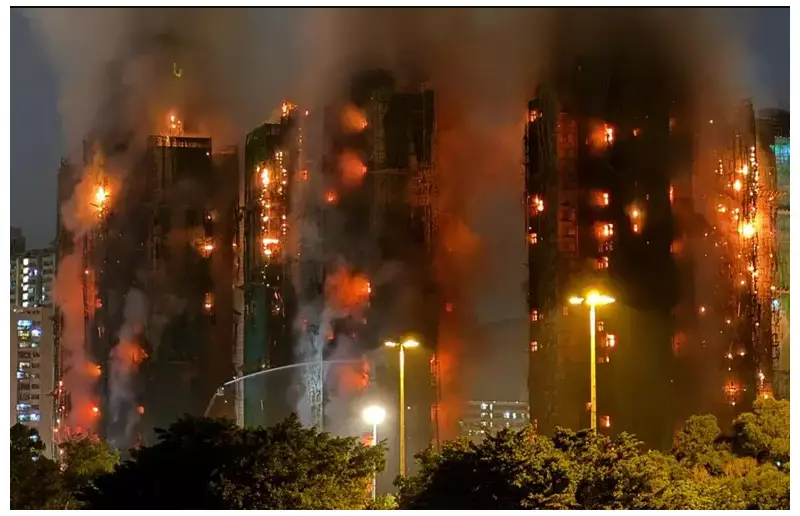
A devastating fire tore through multiple high-rise apartment buildings in Hong Kong's Tai Po district on Wednesday, November 25, claiming at least 13 lives and leaving several residents trapped inside.
Tragic Loss of Life and Mass Evacuation
Fire services confirmed that nine victims were discovered dead at the scene, while four others succumbed to their injuries after being rushed to hospital. The blaze prompted emergency services to evacuate approximately 700 residents to temporary shelters as flames rapidly consumed the buildings.
The fire began in the afternoon and quickly escalated, climbing up bamboo scaffolding and construction netting that surrounded the residential towers. By nightfall, the situation had deteriorated significantly with flames and thick smoke pouring from numerous apartment windows.
Rapid Escalation and Emergency Response
Officials raised the fire alarm to level 5, the highest severity rating, as the emergency intensified. Disturbing video footage captured at least five buildings burning simultaneously, with bright orange flames illuminating the night sky and creating a scene of chaos and destruction.
Local council member Lo Hiu-fung revealed that many of those trapped inside were elderly residents, highlighting particular concerns for vulnerable community members during the disaster.
Safety Concerns and Investigation
Bamboo scaffolding, commonly used throughout Hong Kong for construction and renovation projects, played a significant role in the rapid spread of the fire. The government had previously announced plans to phase out bamboo scaffolding for public projects due to safety concerns, though it remains widely used in private construction.
Authorities have launched a full investigation into the cause of the fire while continuing to assess the complete scale of damage to the affected buildings and community. Emergency services remain on site as operations continue.