Former Defence Chief Condemns Public Reaction to Minister-Military Confrontation
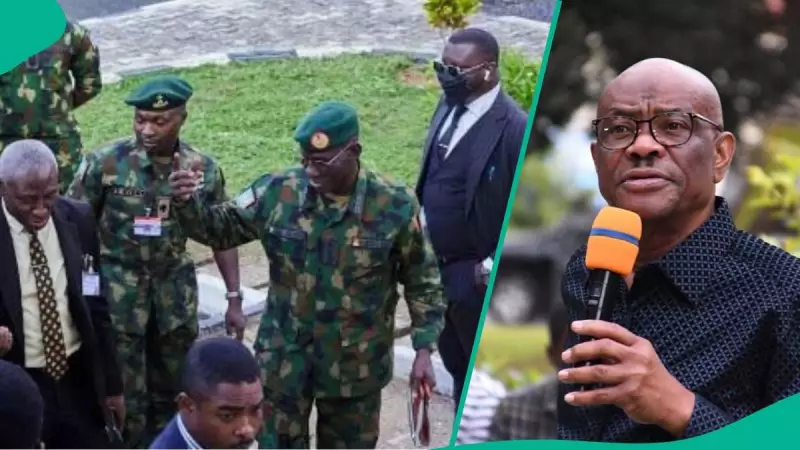
Retired General Lucky Irabor, Nigeria's former Chief of Defence Staff, has strongly criticized the public response to the recent confrontation between Federal Capital Territory Minister Nyesom Wike and Lieutenant Ahmed Yerima, a naval officer. The incident occurred in Abuja and has sparked nationwide debate about civil-military relations.
The retired military leader made his comments during the National Dialogue on Media, Terrorism, and National Security, which formed part of the 21st All Nigeria Editors' Conference held in Abuja on Thursday, November 13.
Uniform Represents State Sovereignty
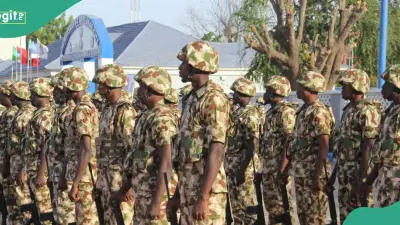
Irabor emphasized that the military uniform symbolizes both authority and national sovereignty. He expressed concern that many Nigerians commenting on the incident are being "misguided" in their understanding of what the uniform represents.
"Any disrespect towards those wearing the uniform amounts to an insult to the Nigerian state," Irabor stated firmly during his address. He stressed that the uniform embodies the collective authority of the nation and should be treated with utmost respect by all citizens.
Mixed Public Reactions Emerge
The video clip containing Irabor's statements has generated diverse reactions across social media platforms and among the Nigerian public. Several commentators have expressed strong opinions on both sides of the debate.
Oladimeji Abdulsamad warned civilians about supporting military actions against political figures, noting that "a military man will never support a bloody civilian." Another commenter, Danbatta, questioned why President Bola Tinubu hasn't taken action against Minister Wike, describing him as exhibiting "unruly behaviour."
However, some social media users challenged Irabor's perspective. Jagaban Media questioned whether the naval officer was legally authorized to be at the location, suggesting the officer might have been "on illegal duty." Victor Abitoye offered even stronger criticism, accusing Irabor of "saying nonsense" and defending the right to challenge uniformed personnel engaged in questionable activities.
The incident continues to highlight the delicate balance between civilian authority and military protocol in Nigeria's democracy. As reactions continue to pour in, the debate raises important questions about the boundaries of civil-military relations and the proper channels for addressing grievances between government officials and security personnel.