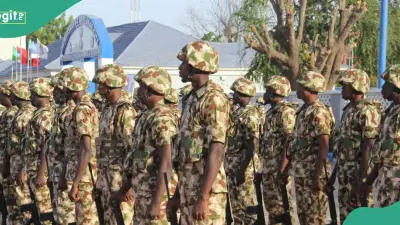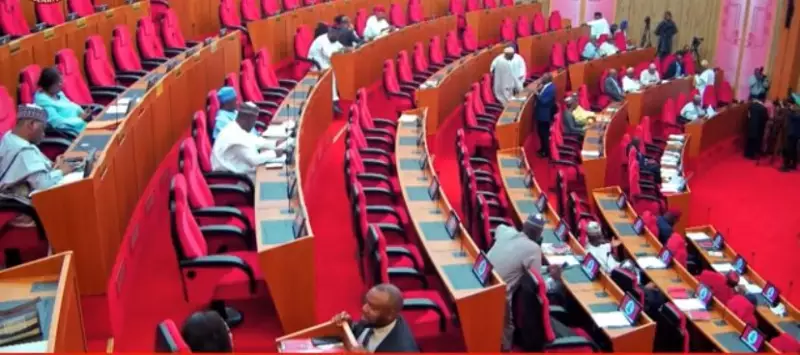
The Nigerian Senate has taken a decisive step towards overhauling the country's archaic military legal framework. A proposed legislation seeking to repeal and re-enact the existing Armed Forces Act has successfully passed its second reading, signaling a potential new era for the nation's defence sector.
Outdated Laws in a Modern Era
Leading the debate on the floor of the Senate, the bill's sponsor, Senator Abdulaziz Yar'adua (APC, Katsina Central), presented a compelling case for change. He highlighted that the current Armed Forces Act is fundamentally rooted in military decrees from the 1960s and was last consolidated in 2004. He argued that this legal framework is no longer compatible with Nigeria's contemporary constitutional order and complex security landscape.
Senator Yar'adua paid tribute to the Armed Forces of Nigeria as the cornerstone of national sovereignty and security. He acknowledged their gallant efforts in defending the nation, from combating insurgency and terrorism to participating in peacekeeping missions across Africa. However, he stressed that the military law has failed to evolve alongside the dynamic defence environment.
Key Provisions of the New Bill
The proposed legislation, titled “A Bill to repeal and re-enact the Armed Forces Act to establish a modern, constitutionally compliant, and operationally responsive legal framework for Nigeria’s military”, introduces several critical updates. Among the most notable changes are the replacement of outdated, nominal fines. Penalties as low as N200 and N500 will be substituted with percentage-based sanctions linked to salary levels, making them more meaningful and deterrent.
Furthermore, the bill seeks to embed fair hearing provisions and extend rights for non-commissioned officers within the military justice system. These measures are designed to boost morale and ensure greater accountability. Senator Yar'adua pointed to nations like the United States, United Kingdom, and South Africa as examples that have already modernized their military laws to foster justice and professionalism, urging Nigeria not to lag behind.
Widespread Senate Support
The bill received robust backing from various senators across party lines. Senator Ali Ndume (APC, Borno South) described the reform as “long overdue,” emphasizing the critical need to align the armed forces with modern legal standards.
Echoing this sentiment, the Senate Chief Whip, Senator Tahir Monguno (APC, Borno North), characterized the bill as a necessary step to subject military authorities to democratic control. He stated that it “seeks to bring our military laws in tandem with international best practices and under the authority of democratically elected institutions.”
Adding his voice, Senator Samson Ekong (APC, Akwa Ibom South) noted that the legislation articulates a “profound principle of reform,” indicating that the time is ripe to deepen the nation's defence policy.
Presiding over the session, the Deputy President of the Senate, Senator Jibrin Barau (APC, Kano North), affirmed that laws are not static but must evolve. Following the successful debate, he referred the bill to the joint Committees on Defence, Army, Air Force, and Navy for further legislative work. The committees have been given four weeks to scrutinize the bill and report back to the larger house.