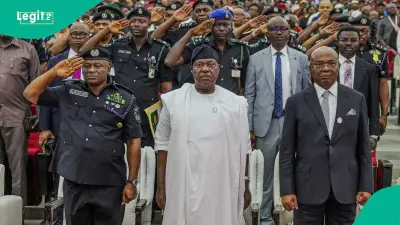
A Nigerian police officer has sparked significant debate after raising crucial questions about the recent confrontation between Federal Capital Territory Minister Nyesom Wike and a naval officer in Abuja. The incident, which occurred in November 2025, has drawn widespread attention and divided public opinion across social media platforms.
Security Protocol Concerns Raised
The police officer, whose video commentary was shared on X by user General_Somto, questioned the fundamental appropriateness of deploying a naval officer to guard a landed property. The officer emphasized that such duties typically fall under police jurisdiction, especially when dealing with civil land disputes or confrontations involving civilian workers.
In his detailed analysis, the police officer stated: "Number one, why is a navy deployed to guard a land? Even if you have a problem with that land like some people are coming to confront your workers, I think the police are the best people to handle that situation. You don't have to deploy soldiers that will be useful elsewhere to come and guard a land."
Criticism of Police Conduct During Incident
The officer also addressed the behavior of the police personnel assigned to protect Minister Wike during the confrontation. He strongly criticized their involvement in the argument, stating that their primary responsibility should have been forming a defensive perimeter around the minister rather than engaging in the verbal exchange.
His professional assessment highlighted that police escorts should maintain security protocols without intervening in their principal's official discussions. He specifically noted: "Secondly, as a police officer, who told you that one of your jobs is to help your VIP or your principal do his work. You escort the minister to that place, what is your business? Just shut up. Form an all round defense and defend the minister, that's all. You have no business stepping into their conversation."
Public Reactions and Divided Opinions
The video shared by General_Somto has generated substantial engagement from Nigerians with varying perspectives on the incident. User @AustinINstate defended the naval officer's presence, arguing that protecting property falls within military responsibilities, stating: "The reason is because the owner of the land doesn't want him to snatch his property. and you mugu don't you know that the work of Soldier is to protect lives and property? Abi land no be property again?"
Another user, @diipodipe, offered a more balanced perspective, acknowledging that while the naval officer might have been following orders, the situation required more diplomatic handling. The user suggested that Minister Wike should have engaged with defense and naval chiefs rather than confronting the officer directly.
Meanwhile, @Love_eeer95 expressed strong support for the minister's position, stating: "When I said the NAVAL officer was wrong people said I'm crazy. People are so engrossed with emotions that they don't see the clear picture. Why would a naval officer be talking back with a whole minister. It's insulting and that naval officer should publicly apologize. What he did was wrong in all shades."
Broader Implications for Civil-Military Relations
The confrontation between Minister Wike and the naval officer raises important questions about the appropriate deployment of military personnel in civil matters. The police officer's commentary highlights ongoing concerns about role clarity between different security agencies in Nigeria.
Some social media commentators have suggested that the naval officer might have been acting on higher orders, which underscores the need for clear communication channels between civil authorities and military leadership. The incident has sparked discussions about whether military personnel should be involved in property protection duties that traditionally fall under police jurisdiction.
As the conversation continues to evolve, many Nigerians are calling for clearer guidelines regarding the deployment of military personnel in civil contexts to prevent similar confrontations in the future. The incident serves as a reminder of the importance of maintaining professional boundaries and protocols within Nigeria's security architecture.